Most podcast studio owners do not go under because they stopped booking sessions. They go under because the money from the sessions they did book arrived too late to cover the rent, the payroll, or the gear repair that could not wait. Revenue and cash are not the same thing, and the gap between them is where a surprising number of otherwise healthy studios quietly run out of runway.
If you are one to three years into running a studio and pulling in somewhere between $5,000 and $30,000 a month, you already know the feeling. Bookings look solid on paper. The calendar is full. And yet the bank balance tells a different story two weeks before rent is due. That gap is not bad luck. It is a cash flow problem, and cash flow problems are fixable with the right systems, not with more hustle.
This article walks through why the gap opens up in the first place, how to build a forecast simple enough to actually maintain, and what to do about the feast-or-famine cycle that defines so many early-growth studios. None of it requires an accounting degree. It requires a bit of structure and the discipline to look at the numbers before they become an emergency.
Why Cash Flow Breaks Before Revenue Does
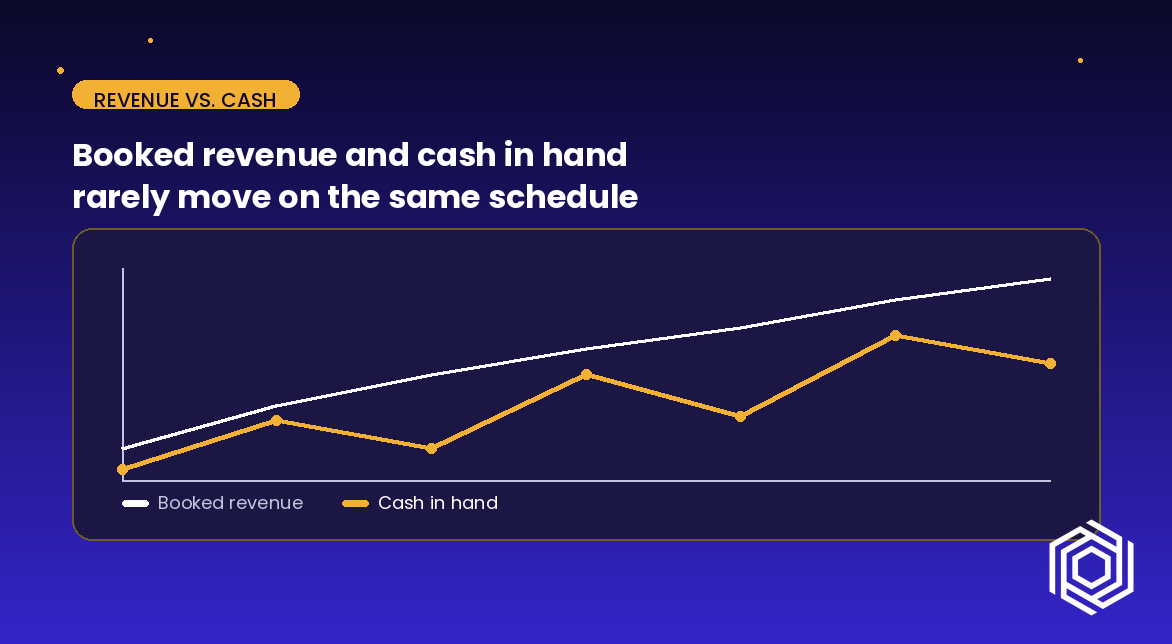
Revenue is what you have earned. Cash flow is what you actually have in hand to spend right now. A studio can show $18,000 in booked revenue for the month and still be unable to cover a $2,000 equipment repair, because half of that revenue is sitting in unpaid invoices, deposits that have not cleared, or packages clients paid for weeks ago that get spent on delivery costs before the session even happens.
The mismatch gets worse in a studio business specifically because of how the money moves. Corporate clients often pay net-30 or net-45. Membership and package clients pay upfront for value they consume over months, which means you are sitting on an obligation, not a windfall, even though the deposit hit your account today. Meanwhile, your biggest expenses (rent, insurance, payroll, software subscriptions) are due on fixed dates regardless of when your clients pay you.
This is the core lesson of cash flow management: it is a timing problem, not a profitability problem. A studio can be profitable on paper and still bounce a payment because profit and cash arrive on different calendars.
The Three Leaks That Drain a Studio's Cash
Three patterns show up again and again in early-growth studios, and each one is fixable once you can name it.
The first is equipment spend that gets treated as routine rather than planned. A studio owner replaces a broken mic or upgrades a camera the week it fails, paying full retail price under time pressure, instead of budgeting for gear refresh cycles months in advance. As covered in the future of podcast studio management, the studios that automate this kind of planning and treat capital spend as scheduled rather than reactive consistently pay less and stress less than the ones firefighting breakdowns.
The second is staffing that scales with revenue optimism instead of revenue reality. Hiring a second producer the month bookings spike, then struggling to make payroll the month after, is one of the fastest ways to turn a good problem (growth) into a cash crisis.
The third, and the most common, is marketing and community spend that goes out the door before the studio has a clear read on what it returns. This is not an argument against investing in growth. It is an argument for tracking which channels actually convert before committing to recurring spend you cannot easily unwind.
Building a Simple Cash Flow Forecast (Without a Finance Degree)
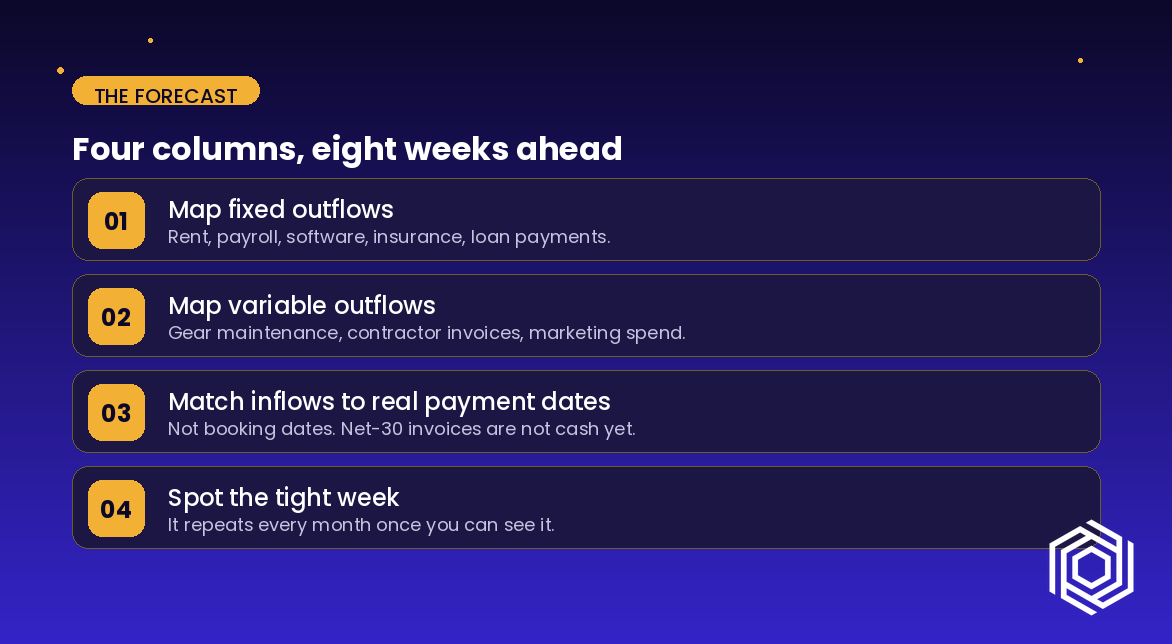
A cash flow forecast does not need to be a twelve-tab spreadsheet. It needs three columns: what is coming in, what is going out, and the date each one actually hits your account, projected 8 to 12 weeks ahead.
Start with fixed outflows: rent, payroll, software, insurance, loan payments. These are predictable and should be the backbone of the forecast. Then add variable outflows: gear maintenance, contractor invoices, marketing spend. Then map inflows by actual expected payment date, not by booking date. A session booked today that is paid via a package a client bought two months ago is not new cash. A corporate invoice sent today on net-30 terms is not cash for another month.
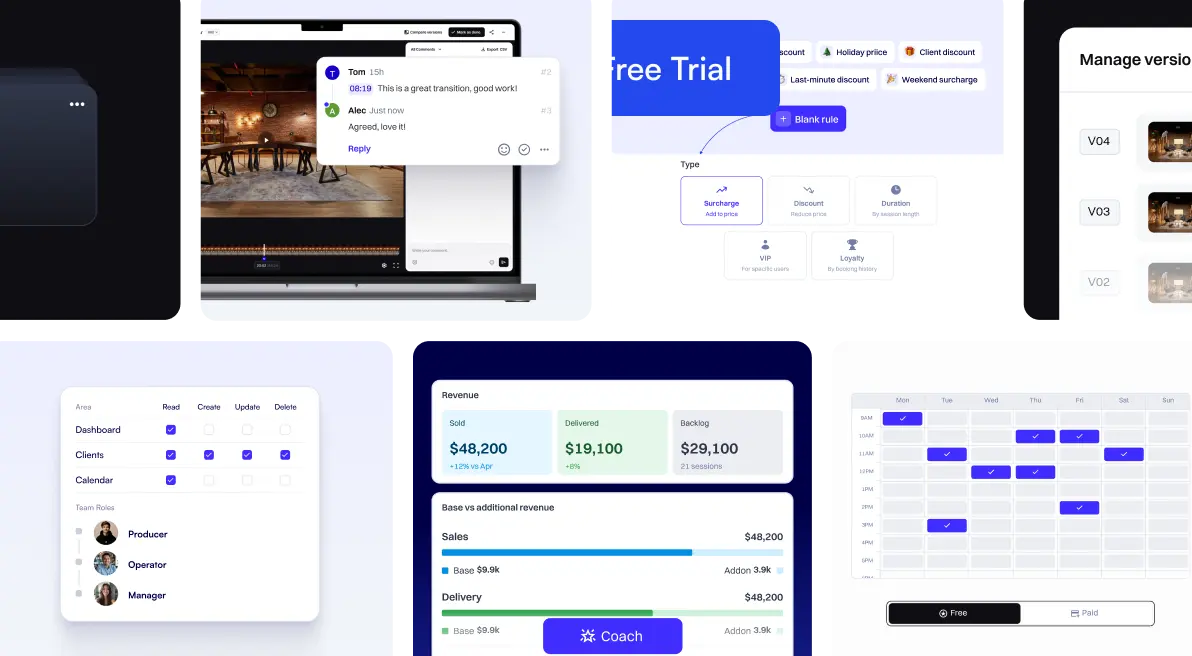
Once this is mapped, the pattern becomes visible almost immediately. Most studios discover their tightest week is not random. It is the same week or two every month, usually right after payroll and right before a batch of invoices clears. Knowing which week that is turns a vague sense of dread into a specific, plannable event. Studios using Podyx's management tools to centralize bookings, invoicing, and payments get this visibility automatically instead of piecing it together from three different spreadsheets and a bank app.
Smoothing the Feast-or-Famine Cycle with Recurring Revenue
The single most effective lever against cash flow volatility is shifting a portion of revenue from one-off bookings to recurring commitments. A studio that is 100 percent pay-per-session will always have a lumpy cash position, because clients book in bursts around launches, seasons, and budget cycles, not on a steady weekly rhythm.
Package deals, retainers, and membership tiers change this by pulling future revenue into the present in a predictable, repeatable way. Even converting 20 to 30 percent of your client base to a recurring arrangement smooths out the worst of the swings, because that portion of your income arrives on the same schedule every single month regardless of what the booking calendar looks like that week. This is one of the reasons studios that made the shift early describe it as the single change that let them stop treating every month like a fresh emergency, a theme explored further in the guide to becoming profitable faster.
The trade-off is real: recurring revenue usually means a small discount relative to one-off pricing. That discount is the cost of predictability, and for a studio managing tight cash flow, predictability is worth paying for.
Managing the Expense Side: Timing, Not Just Cutting
Cash flow management gets framed as a revenue problem more often than it should. Half the fix is on the expense side, and it has almost nothing to do with cutting costs. It has to do with controlling when those costs land.
Negotiating net-15 or net-30 terms with vendors instead of paying on delivery frees up real breathing room without spending a dollar less over the course of a year. Timing larger capital purchases (a new camera package, a room buildout) for months when a wave of package renewals or corporate invoices is scheduled to clear is a small operational habit that pays off every quarter. And consolidating software subscriptions, insurance renewals, and other recurring charges onto a single billing date, rather than letting them scatter across the month, makes the forecast easier to read and the surprises rarer. This is also where running the whole studio, bookings, invoicing, and payments, through one platform like Podyx pays for itself, since every charge lives on the same calendar instead of three different logins.
None of this requires spending less. It requires spending on a schedule that matches when the money is actually there, which is exactly the discipline covered in the essential SOPs every studio needs to keep the operational side from working against the financial side.
Building a Cash Reserve Before You Think You Need One
Every studio owner intends to build a reserve eventually. The ones who actually do it treat it as a fixed, non-negotiable line item, not as whatever is left over after everything else is paid, because there is rarely anything left over.
A reasonable early target is one month of fixed operating costs held in reserve, built up in small automatic transfers rather than one heroic effort. That single month of buffer is usually enough to absorb a slow booking month, a late corporate payment, or an unplanned repair without triggering a scramble. As the studio matures, that target should grow toward two to three months, which is closer to what studios need to weather a genuinely bad quarter rather than just a bad week.
The studios that get burned hardest are almost never the ones with the worst quarter. They are the ones with an average quarter and zero reserve, where a single late payment cascades into missed payroll. A reserve is not a luxury for later. It is the thing that determines whether a normal bad month stays a normal bad month.
When to Bring In Help
There is a point where DIY cash flow tracking stops being a badge of scrappiness and starts being a liability, usually somewhere around the time a studio is running multiple rooms, carrying payroll for more than one or two people, or juggling both corporate net-30 clients and consumer pay-per-session clients at once. At that complexity level, a part-time bookkeeper or fractional financial help is not overhead. It is the thing that keeps the forecast accurate enough to trust.
This is also exactly the kind of operational question that comes up constantly inside the Podcast Studio Owners community, where studio owners who have already crossed that threshold share what worked, what a bookkeeper actually costs at that stage, and which mistakes are avoidable with a little planning. If you are not sure whether you have hit that point yet, that is usually a good sign you are close to it.
The One-Line Summary
Cash flow management is not about earning more, it is about knowing exactly when the money you have already earned actually arrives, and building enough of a buffer that the gap between those two facts never becomes an emergency.
The widest timing gap of all is money you have technically earned and never collected. We wrote up how our own studio in Dubai ran up $50,000 in unpaid sessions, and the one change in sequencing that closed it.
One way to close that timing gap directly is to sell the time before you need it. We ran three prepaid session packages that brought in $29,656 across our two slowest months, and the cash landed while the slow stretch was happening, not after it.
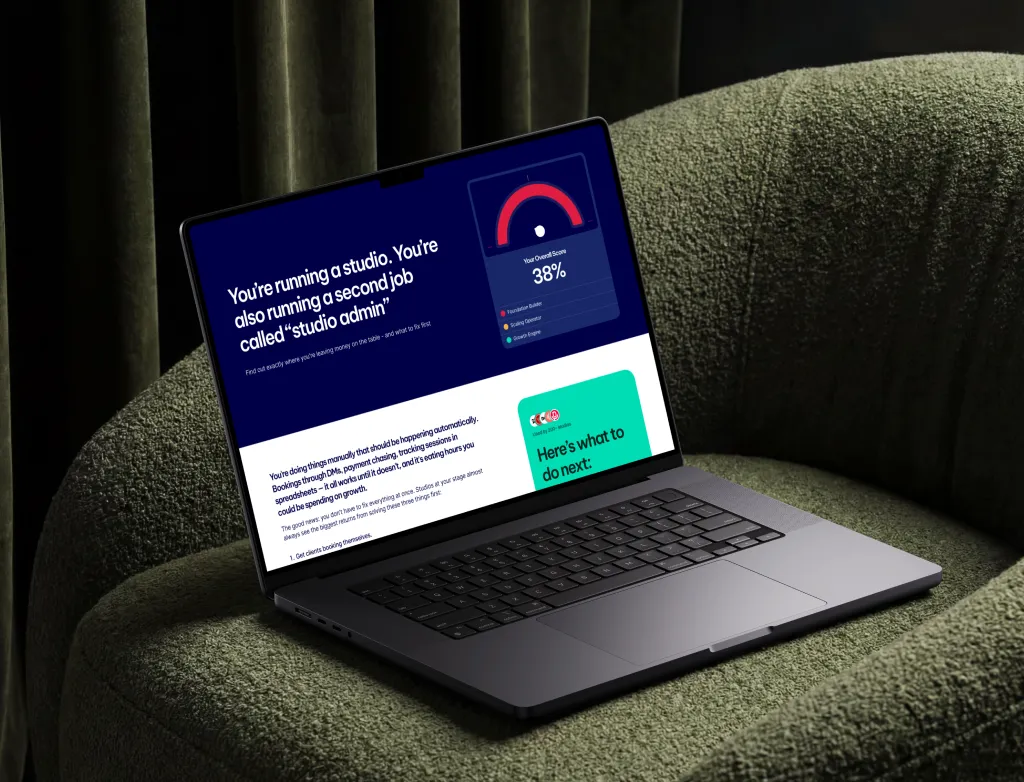
If you are not sure whether your studio's cash flow problem is a timing issue or a deeper pricing and revenue mix issue, the Podyx studio growth quiz walks through a short set of questions and hands back a personalized read on where the pressure is actually coming from. For studios that already suspect the fix involves tightening up billing, packages, and forecasting in one place rather than three spreadsheets, booking a short demo is the fastest way to see what that looks like day to day inside Podyx. And if you would rather explore first, the self-serve trial is open with no call required.
.jpg)
%20(1).jpg)