.jpg)
Running a podcast studio today requires more than great equipment and a creative space. As the industry evolves and competition increases, the studios that thrive are those that treat data not as an optional add‑on but as a core business asset. Whether it's understanding utilization patterns, tracking marketing performance, or forecasting demand, data empowers studio owners to make smarter decisions that can directly impact revenue, efficiency, and long‑term growth.
In this article, we'll explore why data matters for podcast studios, how to collect and interpret it, and how to turn insights into action - regardless of whether you operate a boutique studio, a corporate media space, or a multi‑room production hub.
Why Data Should Be at the Heart of Your Studio Strategy
Podcasting is no longer a niche creative pursuit, it's a competitive business channel. As studios offer recording, production, editing, and content services, they must understand not only who their clients are but how those clients use the space and what drives purchasing behavior. Data gives you truth: insights into how sessions are booked, which offerings are most popular, where revenue is coming from, and where opportunities are being missed.
Most studios make business decisions based on intuition or anecdotal evidence, but intuition can only take you so far. Data, by contrast, gives you measurable, objective evidence about client behavior and revenue patterns. When harnessed properly, it reveals trends, predicts future outcomes, and helps you allocate resources efficiently.
Types of Data Podcast Studios Should Track
Not all data is equally valuable. To make meaningful decisions, studios should focus on several core categories of insights:
1. Booking and Usage Data
Tracking how and when customers book your studio space reveals peaks and troughs in demand. This can tell you:
- Which days and times are most popular
- Which studio setups or configurations are preferred
- How long sessions tend to last
- Seasonal fluctuations in bookings
Understanding these patterns helps you optimize pricing and availability. For example, if weekends are always booked but weekdays are empty, you might offer weekday promotional packages to fill those slots. Or, if one room consistently has higher demand, you can justify expanding similar setups.
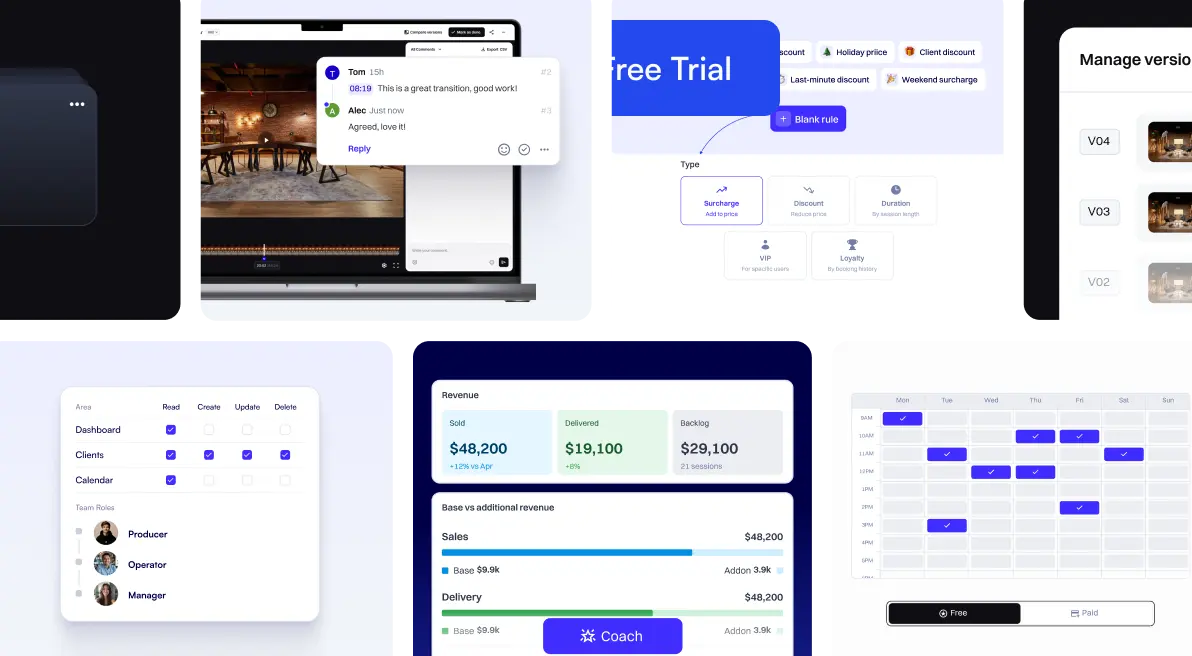
Podyx's scheduling and booking data capture these patterns automatically, giving you visibility into utilization without manual tracking.
2. Revenue and Pricing Insights
Knowing how much money your studio makes, and from which services, is only the first step. Data lets you see how pricing decisions affect revenue, client behavior, and profitability.
Instead of guessing whether a pricing tier is too low or too high, data shows you:
- How often price changes lead to increased bookings
- Whether clients buy add‑on services like editing or post‑production
- How different packages perform (standard recording versus full production)
- Which client segments bring the most value over time
This information helps you refine your pricing strategy and promote the services that generate the most return. Pricing not only affects revenue but also positions your studio in the market - data helps you align price with perceived value.
3. Client Demographics and Behavior
Data is not just numbers; it paints a picture of your clients. Who books your studio and what they do once inside matters.
A studio with mostly music producers will behave differently than one dominated by corporate podcasters, influencers, or creative agencies. Understanding demographic data helps you:
- Tailor your marketing and messaging
- Customize packages for specific client profiles
- Offer training or resource content that fits customer needs
- Build loyalty programs for repeat clients
When you know who your customers are, you can speak directly to their needs and preferences instead of sending generic promotional messages that miss the mark.
4. Marketing Performance and Attribution
Where do your clients come from? Knowing which marketing channels drive bookings and revenue allows you to invest more intelligently, spending where it matters and cutting spend where it doesn't.
For example:
- Are most bookings coming from organic search?
- Do social media ads convert into actual revenue?
- Which referral partners bring you long‑term clients?
- Does email outreach improve repeat bookings?
Tracking marketing attribution is essential to avoid wasting budget on ineffective tactics. Data ties revenue back to its source, so you can allocate marketing dollars for the highest ROI.
5. Customer Satisfaction and Retention Metrics
Repeat clients are the backbone of a sustainable studio. Data shows you how often clients return, whether they use additional services, and at what point they stop booking.
This allows you to focus on retention and lifetime value, not just acquisition. Some measurable indicators include:
- Repeat booking rates
- Average time between bookings
- Churn rates for frequent customers
- Feedback trends from surveys or reviews
When you can quantify satisfaction and retention, you can take proactive steps to improve the client experience and reduce churn, making every booking count more.
How to Collect the Right Data Without a Data Team
Many studio owners worry that data analysis requires a specialist or an entire analytics department. That's not true. Today's tools, including Podyx and modern studio management systems, capture much of the data you need automatically.
Booking systems record session starts and finishes. Payment platforms log revenue streams. CRM tools store customer profiles. Website analytics track web traffic sources. You don't need to manually gather all this information; just know where to look and to interpret it.
Beyond studio software, basic tools like Google Analytics, email marketing dashboards, and social media insights add layers to your understanding of traffic and conversions. These tools don't require coding expertise. Instead, they give readable dashboards and share metrics that matter.
Turning Data Into Decisions
Collecting data is only half the battle. The real advantage comes from translating numbers into decisions that improve your business outcomes.
For instance:
- If data shows afternoon bookings lack demand, consider offering discounted “off‑peak creativity hours” to fill those slots.
- If customer segments show a preference for editing bundles, tailor packages and promote them consistently.
- If marketing channels are underperforming, reallocate investment to higher‑impact channels.
- If client retention dips after three bookings, implement a loyalty program that rewards the fourth visit.
Actionable insights like these directly influence revenue, scalability, and sustainability. And once you see tangible improvements, data becomes less intimidating and more empowering.
Using Forecasting to Plan for the Future
Data doesn't just show what happened; it helps predict what will happen. Forecasting uses historical trends to anticipate future demand. For example, if booking volumes spike every December and January, you can prepare with staffing plans, promotional campaigns, and inventory readiness.
Forecasting also supports financial planning and budgeting. Instead of reactive adjustments, you operate proactively, positioning your studio ahead of market shifts, holiday booking rushes, or seasonal slow periods.
Why Data‑Driven Studios Outperform Competitors
In a crowded market, differentiation is key. Studios that rely solely on instinct, tradition, or rough estimates risk missing opportunities and overspending in the wrong areas. By contrast, data‑driven studios:
- Make confident pricing decisions backed by evidence
- Focus marketing where it produces the best results
- Tailor experiences to customer segments
- Anticipate demand instead of reacting to it
- Invest in services and add‑ons that clients actually want
Decisions rooted in data outperform decisions rooted in guesses, and more importantly, data decisions scale as your business grows.
Conclusion: Data Is the Competitive Edge Every Podcast Studio Needs
In the early days of podcasting, creativity was king. Today, business acumen is just as important as production quality. Studios that embrace data are able to:
- Understand clients better
- Grow revenue intelligently
- Operate more efficiently
- Plan with confidence
- Adapt to market shifts quickly
Tools like Podyx make data collection and analysis accessible to studios of all sizes: providing insights you can act on without hiring analytics experts.
In a landscape where thousands of studios compete for bookings and creators, data gives you the edge. When you measure intelligently and act strategically, your studio doesn't just operate, it thrives.
Want to see how Podyx handles bundles, add-ons, and corporate client management in one platform? Book a free 30-minute walkthrough.
Podyx gives you the tools to structure your pricing, sell bundles, manage add-ons, and track average revenue per session — all in one place. Try it free for 30 days, no credit card required.
.jpg)
.jpg)