Last year our studio in Dubai ran up around $50,000 in unpaid services.
It's a bit embarrassing to write that down. I run a studio. I build software for studios. And I still let fifty grand walk out the door because we didn't have a process for the most basic thing in the business, which is getting paid.
None of it was fraud. All of it was ordinary. A customer we knew. A customer who'd promised. A customer difficult enough that nobody on the team wanted to be the one to push. We'd create the booking, generate the Stripe link or send the invoice, and then the session would arrive. They'd walk in, record, walk out. Nobody wants to make a scene at the door about a card that hasn't gone through, least of all with a repeat client who's been coming for a year.
Then we'd chase. For months. We collected part of it. A good chunk we never saw again. If you've ever spent a week chasing money instead of planning with it, you know exactly what that does to a month.
The thing I got wrong for a long time is that I thought this was a collections problem. It isn't. It's a sequencing problem. The moment someone has used your room you've already handed over the only leverage you had, and everything after that is negotiation. Better invoicing wouldn't have fixed it. Better templates wouldn't have fixed it. The only thing that fixes it is the payment landing before the door opens.
The fix turned out to be a checkbox
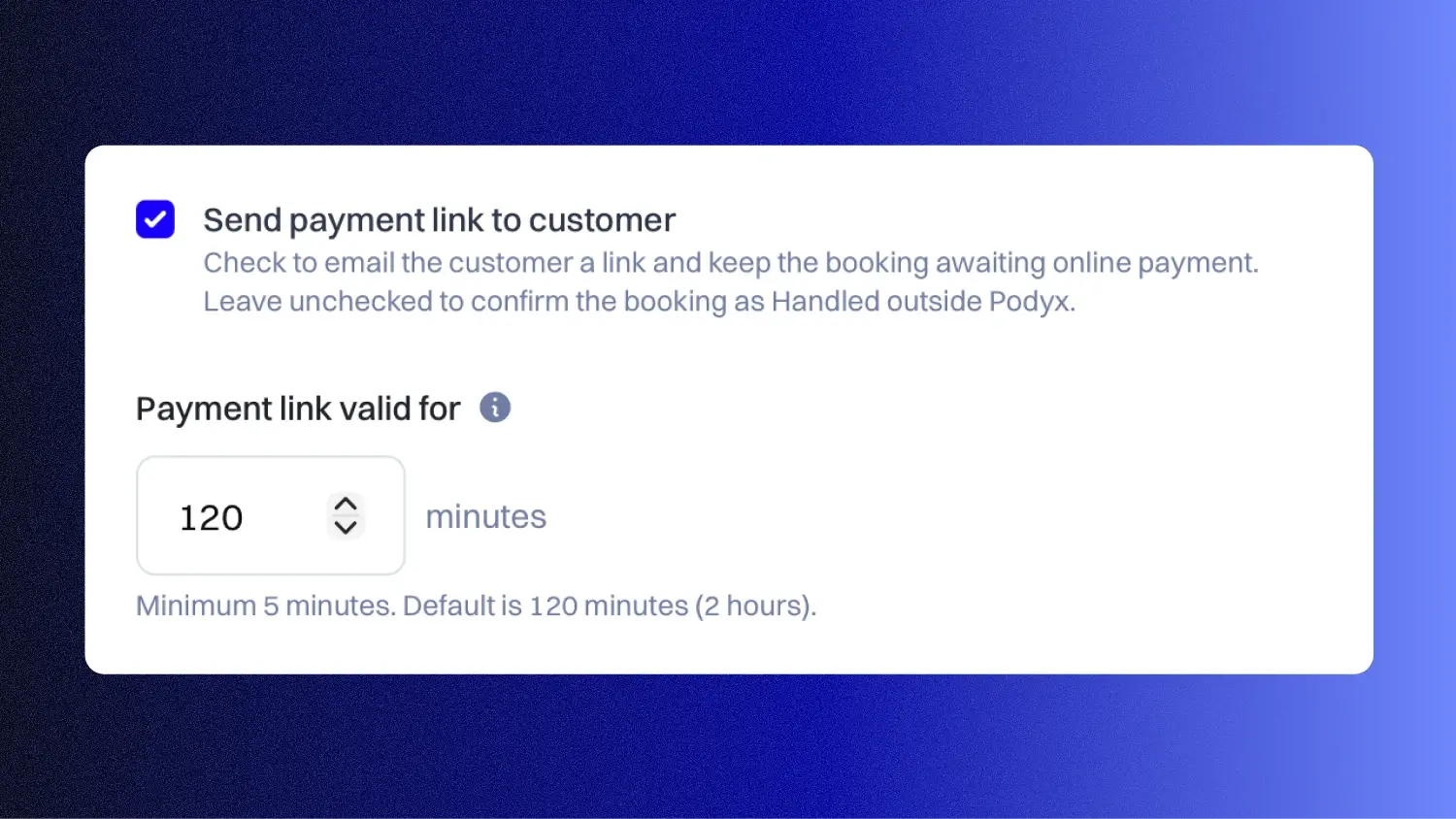
When you create a booking manually in Podyx 2.0 there's now an option to send the customer a payment link and hold the slot until they pay.
The booking goes into your calendar as pending payment. It blocks the availability so nobody else takes the slot. The customer gets an email from your studio with the full session summary and a pay now button that drops them onto the normal checkout.
If they pay, the status flips to confirmed and the session is real.
If they don't pay inside the window you set, the status changes to expired and the booking comes off the calendar. The slot goes back to available, which matters more than it sounds if you're already fighting to fill empty hours. And nobody had to have the awkward conversation.
That's it. It sounds small written down. It changed how we run the studio day to day.
Setting it up
- Open your calendar and click the slot you want, or start a new individual booking.
- Select the customer.
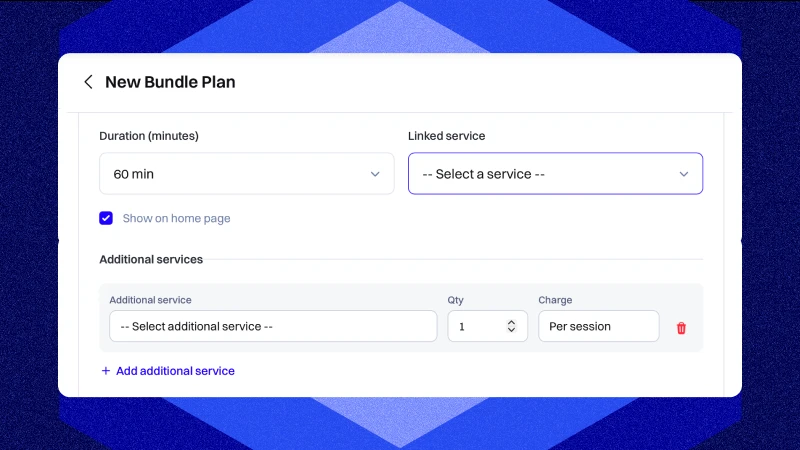
- Pick the base service, the number of recording seats, and any add-ons.
- Choose the file transfer option.
- Tick send payment link to customer.
- Set the expiry window. Default is 120 minutes. You can go as short as 10 or as long as 240.
- Create the booking.
The email goes out immediately. If the customer says it never arrived you can resend from the booking page, and if you need the slot back sooner you can force expire it.
This sits alongside the other changes we've made to admin booking and subscriptions, so if you create a lot of bookings by hand it's worth reading both.
Choosing the window
This is the part worth actually thinking about rather than leaving on default. Short windows create urgency and free up the slot faster. Longer windows are kinder to someone sitting in a meeting who can't get to their card.
We've had customers tell us the window was too tight. Honestly, I don't mind that at all. A customer complaining about a payment deadline is a customer talking to you about payment, which is the exact conversation the old process was designed to avoid. You'd rather have that friction now, in a message, than six months later in a spreadsheet of people who owe you money.
What it's worth so far
Two things, and they're not the same size.
The time is the one I underestimated. We reckon it's saving us at least ten hours a week of follow-ups, checking whether something landed, and chasing. More than a full day a week, spent on work that produced nothing.
The money I can't put a clean figure on yet, and I'd rather give you a real number in a few months than a flattering one now. What I can tell you is exactly where the $50,000 came from, and this closes the door it walked out of.
How to tell it's working
Give it two weeks and look at three things.
How many of your manual bookings went out with a payment link attached. If it's not most of them, the habit hasn't landed with your team yet.
How many expired without payment. Those are the sessions you'd previously have delivered for free, and seeing that number is uncomfortable in a useful way.
How much time your team spends chasing payment. That's the one that surprised us most.
If you're still piecing this together across a calendar, a card reader and a spreadsheet, it's worth stepping back and looking at how studios handle bookings and payments end to end before you fix any single piece of it.
One last thing. I'd like to know what your unpaid number looks like. Almost nobody in this industry says theirs out loud, which is exactly why we all quietly assume we're the only ones this happens to. I've just told you mine, so it only seems fair. Send yours to hello@podyx.com and I'll put together what the spread looks like across everyone and publish it here, with no names attached.
.jpg)
.jpg)