Every podcast studio that closes has a story. A landlord who raised the rent. A partner who lost interest. A market that "just wasn't ready." Those stories are usually true, and they are usually not the real reason.
Look closely at studios that shut down within their first three years, and a much smaller set of patterns shows up again and again. Not one dramatic failure, but a slow accumulation of decisions that seemed reasonable at the time: a price that never got revisited, a lead that never got a second follow-up, a calendar that looked full on paper but was half empty in practice.
This is not a list to scare anyone out of opening a studio. The industry is growing, and plenty of operators are building profitable, durable businesses. But the studios that make it tend to have caught these patterns early, before they became the reason for a closing sale on secondhand mic booms. The studios that do not catch them usually do not realize what happened until the bank balance says it plainly.
Here are the six patterns that show up most often in the studios that did not make it, and what separates them from the ones still standing.
They Treat It Like a Hobby, Not a Business
The most common thread in failed studios is not bad equipment or a bad location. It is an absence of a real plan. Someone loves podcasting, has some savings, finds a space, and starts booking sessions with friends and referrals. For a few months, that feels like enough.
It is not enough, because a hobby does not need a pricing model, a target client, or a plan for the slow months. A business does. Studios that last are the ones that treated the first ninety days as a business launch, not an extended trial run, mapping out who they were serving, what it would cost to break even, and what the first real growth lever would be. The guide on starting a podcast studio the right way covers exactly this groundwork, and it is worth doing before the first client ever sits down at the mic.
The studios that skip this step are not lazy. They are just optimistic in a way that does not survive contact with a slow Tuesday afternoon.
They Underprice and Never Fix It
Underpricing at launch is common and forgivable. Underpricing three years later is a business decision, and it is usually the one that ends the business.
Founding rates get set low to win the first clients, which makes sense. What does not make sense is leaving those rates untouched as costs rise, as the studio's reputation grows, and as demand exceeds capacity. Owners tell themselves they will raise prices "once things are more stable," but things never feel stable enough, so the increase never happens. Meanwhile rent, gear replacement, and staff costs keep climbing against a rate card frozen in year one.
The studios that survive treat pricing as something to revisit on a schedule, not something to fear. They watch utilization, they watch what comparable studios in the market charge, and they raise rates deliberately instead of apologetically.
There is also a psychological cost to underpricing that rarely gets discussed. A studio charging well below market signals, whether the owner intends it or not, that the space and the service are not worth much. Clients pick up on that signal. Raising a rate is not just a revenue decision, it is often the moment a studio starts attracting the kind of client who values the work and treats the booking seriously instead of the kind who is shopping purely on price.
They Have No Follow-Up System for Leads
A studio can have a full inbox and an empty calendar at the same time. It happens constantly. Someone fills out a contact form, gets a reply within a day, and then the conversation goes quiet because there is no process to bring them back.
Failed studios almost always ran on memory instead of process. The owner remembered to follow up with leads when things were slow and forgot when things were busy, which meant the exact moments that needed the most consistent follow-up got the least of it. Studios that make it treat lead follow-up the way they treat session bookings: as a system, not a mood. That means defined touchpoints, defined timing, and a way to see at a glance who has gone quiet. The SOPs every studio needs to operate smoothly start with exactly this kind of process, because a studio without documented systems is a studio that depends entirely on one person's memory holding up under pressure.
They Ignore Utilization Until the Cash Runs Out
Utilization rate, the percentage of bookable hours actually booked, is the single number that predicts studio survival better than almost anything else. Most studios that fail never track it at all. They know the calendar "looks busy" without knowing whether busy means 70 percent booked or 35 percent booked with a few loud weeks.
By the time cash flow problems show up, utilization has usually been low for months. The studio just did not have a number attached to the feeling. Owners who track utilization weekly catch the dip early enough to act on it: adjust pricing, run a promotion, tighten the booking window, or go after a new client segment before the slow patch becomes a pattern. Owners who do not track it find out the hard way, usually around the same time a big expense hits.
The fix is rarely complicated once the number is visible. Studios that catch a utilization slide early usually respond with something small and specific: a weekday discount to fill dead hours, a referral push aimed at the client type that books consistently, or a hard look at whether the booking page itself is turning people away before they ever reach the calendar. None of that is possible without first knowing the number is dropping.
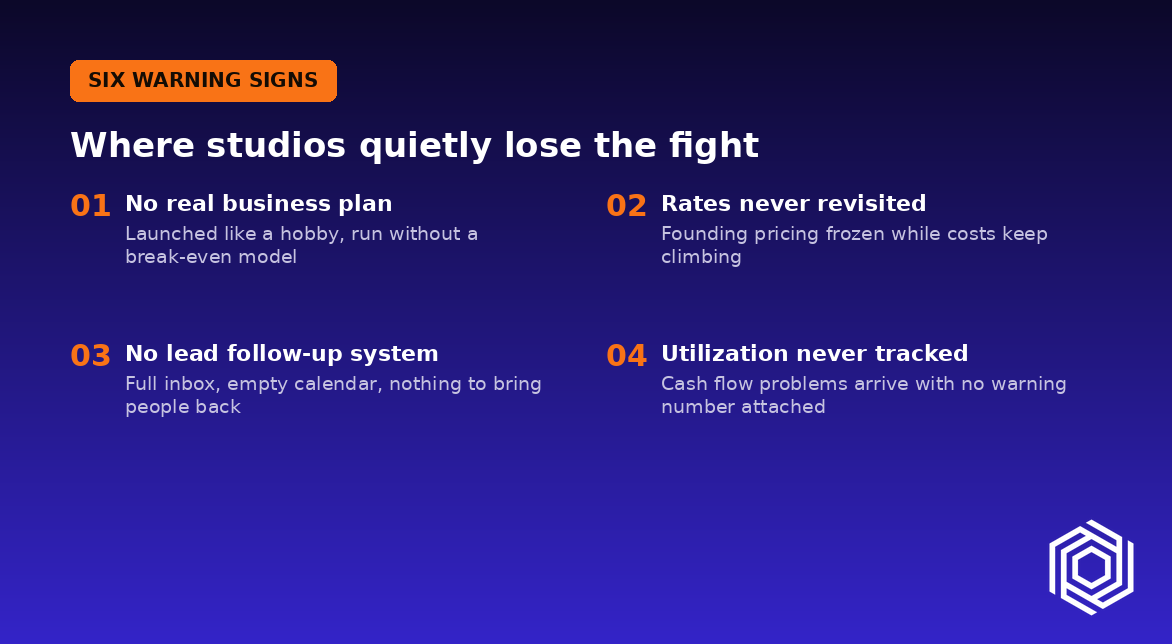
They Never Build a Reason for Clients to Come Back
A studio that only wins new clients and never turns them into repeat clients is running on a treadmill that gets faster every month. Acquisition never stops feeling urgent, because nothing is compounding underneath it.
The studios that fail are almost always acquisition-only. They pour effort into the next new booking and put almost none into making the last client want to come back. The studios that make it flip that ratio over time: memberships, package deals, and a genuinely good client experience turn a one-time booking into a recurring one. That shift is covered in detail in the case for building real client loyalty, and it is one of the highest-leverage changes an early-stage studio can make, because retained revenue does not require a new marketing dollar to arrive.
They Try to Scale Before the First Room Works
Opening a second location, hiring a producer, or adding a new service line all feel like progress. They are only progress if the first room is already working, meaning it is consistently utilized, profitably priced, and running on documented systems rather than the owner's constant attention.
Studios that fail at scaling almost always scaled too early, layering complexity onto a foundation that was not stable yet. A second room does not fix a utilization problem in the first one. A new hire does not fix a pricing problem. Complexity amplifies whatever is already true about the business, good or bad. The studios still standing made the unglamorous choice to fix the fundamentals first, even when it meant growing slower than they wanted to.
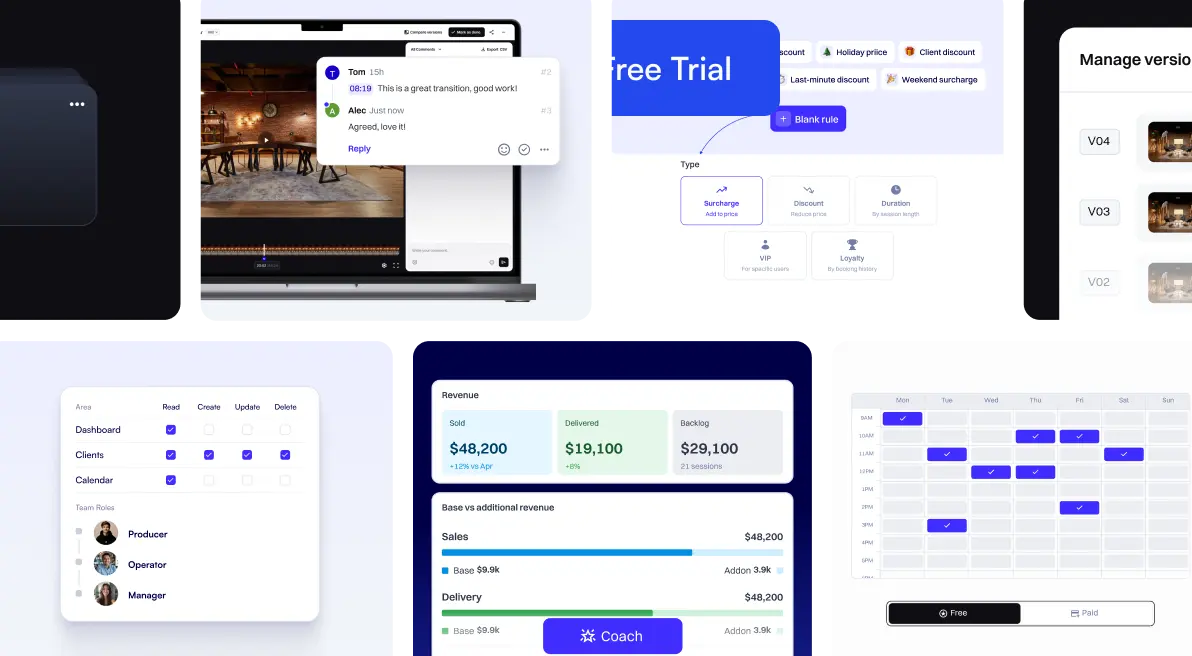
This is also where the right tooling matters more than most owners expect. A studio juggling bookings, invoicing, client files, and follow-up across five different tools is spending energy on administration instead of on the studio itself. Consolidating that into one system, which is exactly what Podyx is built to do, frees up the time that actually goes toward fixing utilization, pricing, and retention instead of chasing paperwork. It is a smaller decision than any of the six patterns above, but it removes a lot of the friction that makes those patterns worse.
None of this has to be figured out alone, either. The Podcast Studio Owners community on Skool exists specifically because most of these mistakes have already been made, discussed, and solved by someone else in the room.
The One-Line Summary
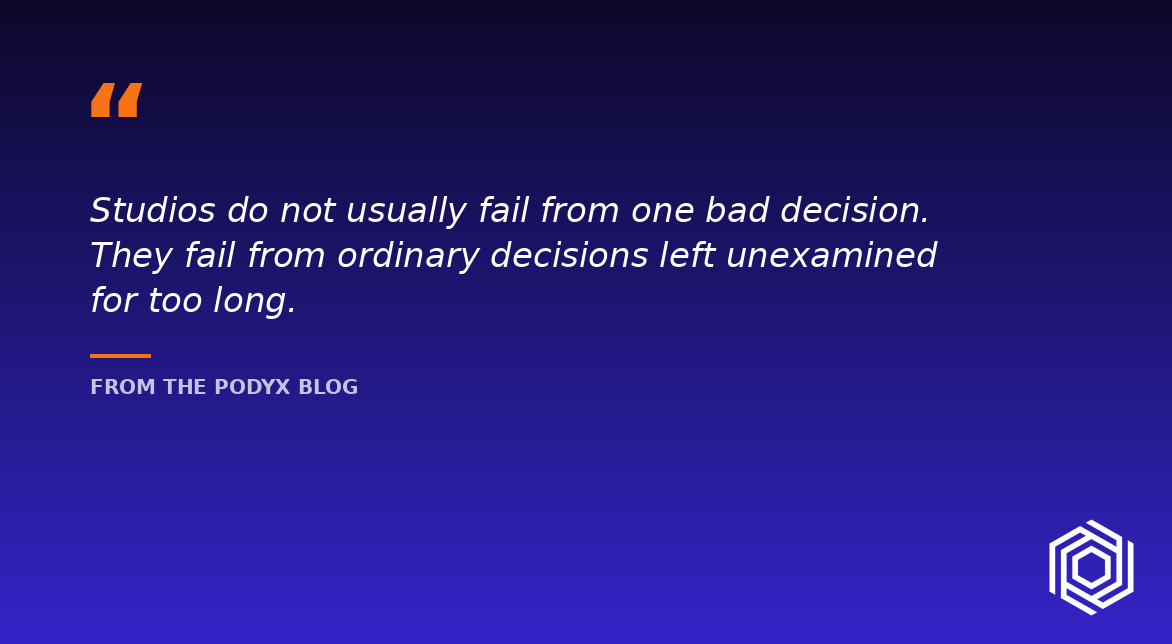
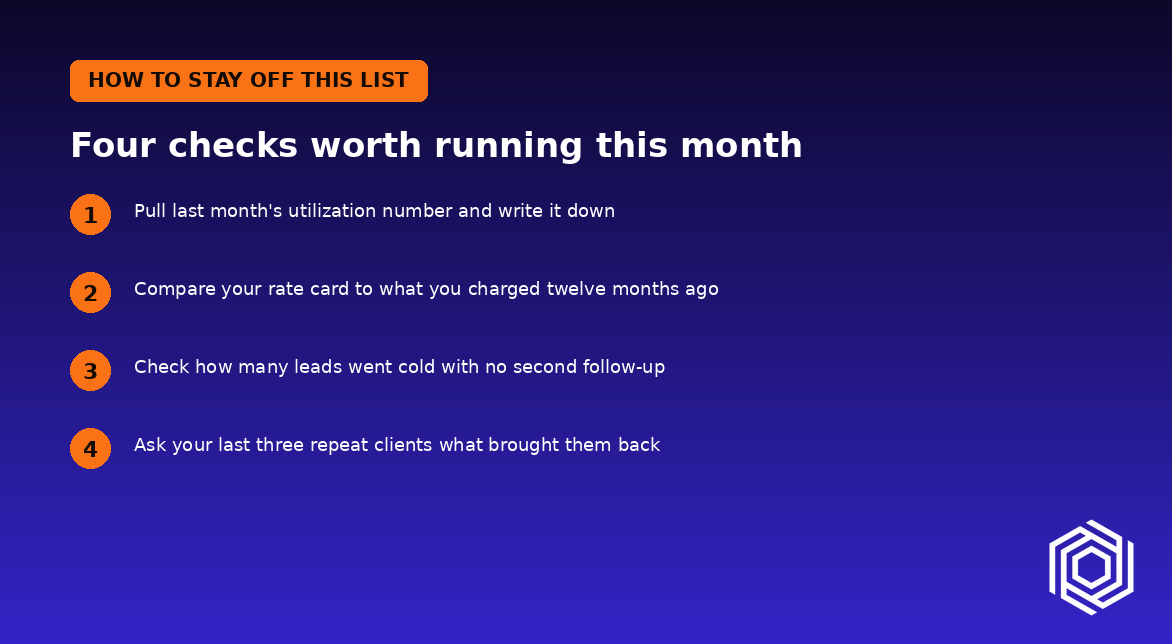
Studios do not usually fail from one bad decision. They fail from ordinary decisions left unexamined for too long: a price never revisited, a lead never followed up, a utilization number never tracked, a client never asked to come back.
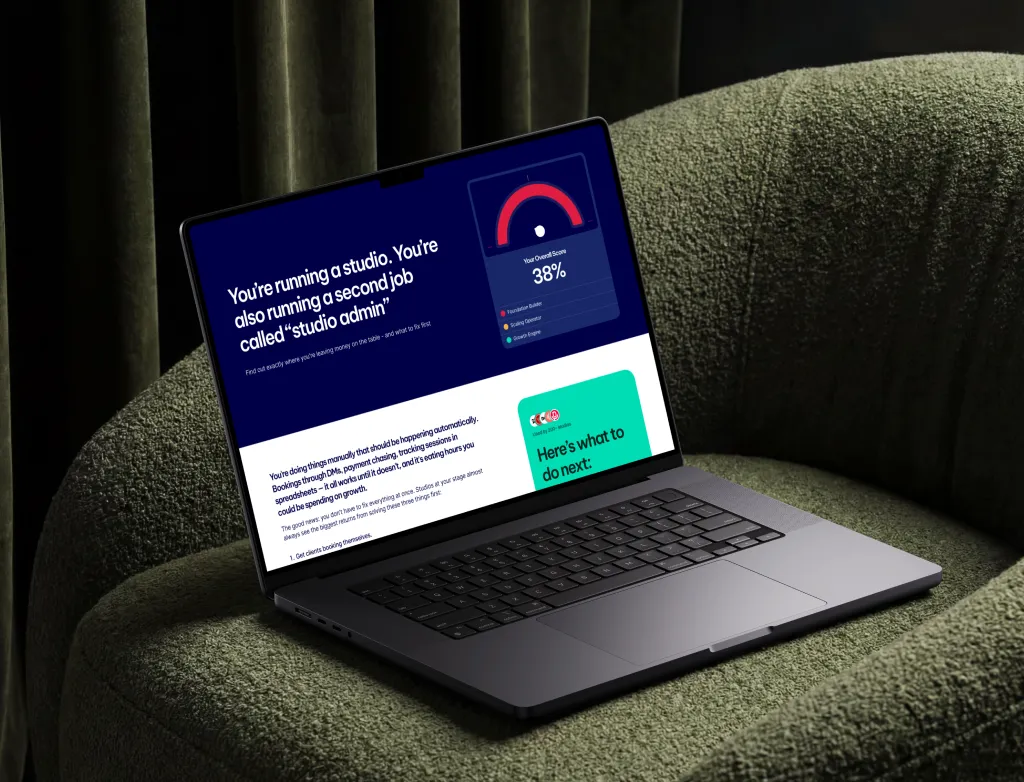
If any of these six patterns sounded familiar, the fastest next step is figuring out exactly where the risk sits before it compounds further. The free studio assessment quiz walks through pricing, utilization, retention, and systems in a few minutes and hands back a clear picture of where the studio actually stands. For owners who already know they need better systems around bookings, invoicing, and client follow-up, booking a short call with the Podyx team is the faster route to seeing whether the platform fits. And for anyone who would rather explore hands-on first, starting a free trial takes a few minutes and requires no call at all.
ss.jpeg)
.jpg)
.jpg)