You open the door on day one and it feels like everything is possible. The room looks great, the gear is set up, and you have a handful of bookings lined up. Then week two arrives, and you realize you have no reliable system for client onboarding. Week four, and you are fielding three rescheduling requests at midnight. Month two, and your utilization rate is stuck at 22 percent.
The first 90 days of running a podcast studio are the most formative stretch of your business. The habits, systems, and client relationships you build in this window set the tone for everything that follows. Get them right and you have a foundation that compounds. Get them wrong and you spend the next year patching problems that should have been solved on day one.
This guide walks through what actually matters in each phase: the first 30 days, the middle 30, and the final stretch of your first quarter. It is written for studio owners who are past the "should I do this?" stage and squarely in the "now what?" reality of running a physical recording business.
One important note before we start: this is not a checklist of tasks. It is a framework for thinking about priorities, because the biggest mistake new studio owners make is treating the wrong thing as urgent.
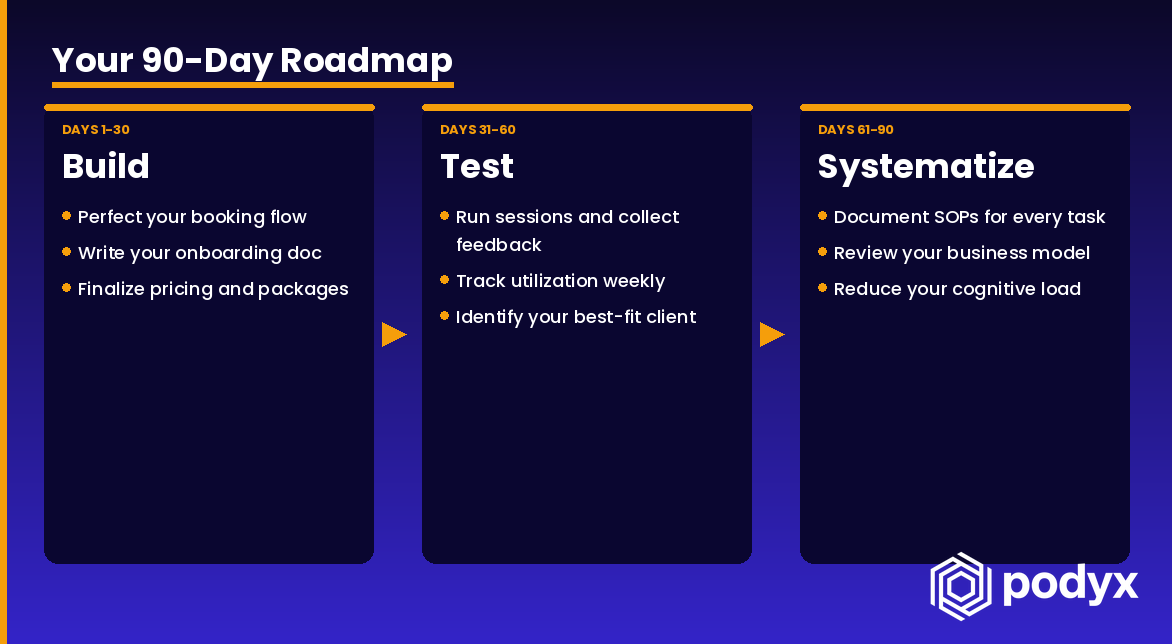
The First 30 Days: Build the Foundation, Not the Audience
The instinct in the first month is to market. To post on Instagram, to run a launch promotion, to tell everyone the studio is open. That instinct is understandable and also premature.
Before you bring in a steady stream of clients, your operational foundation needs to be solid enough to handle them without friction. A bad early experience in a new studio spreads faster than a good one. The first 30 days should be spent building the systems that make those early experiences consistently excellent.
That means three things above everything else.
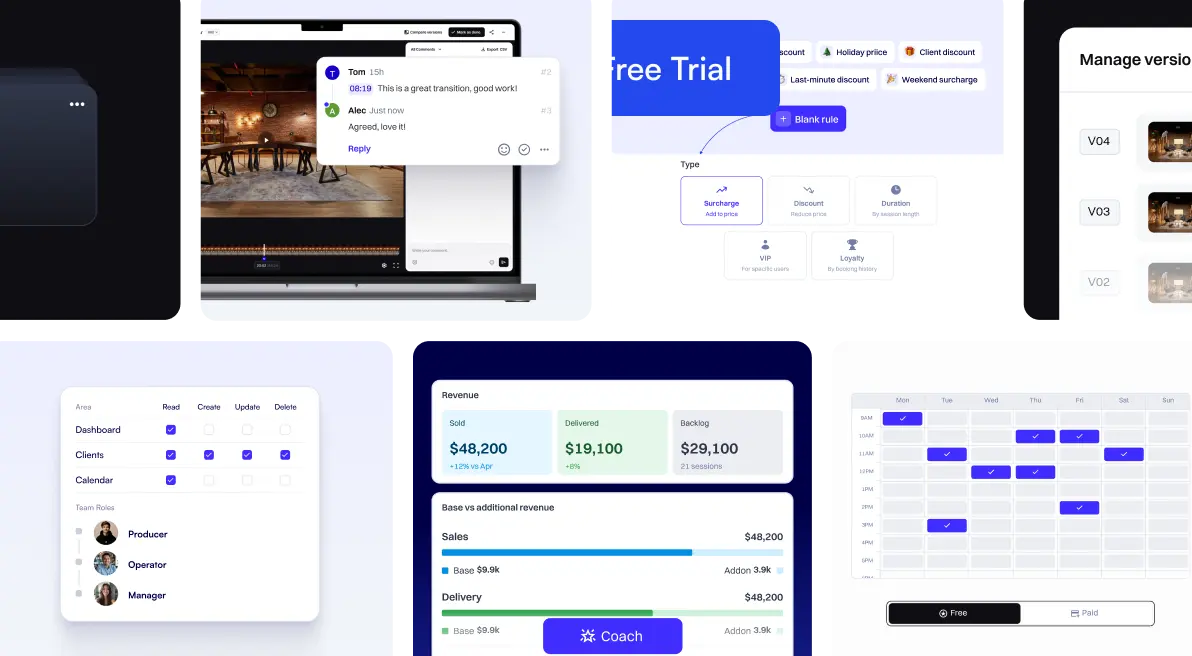
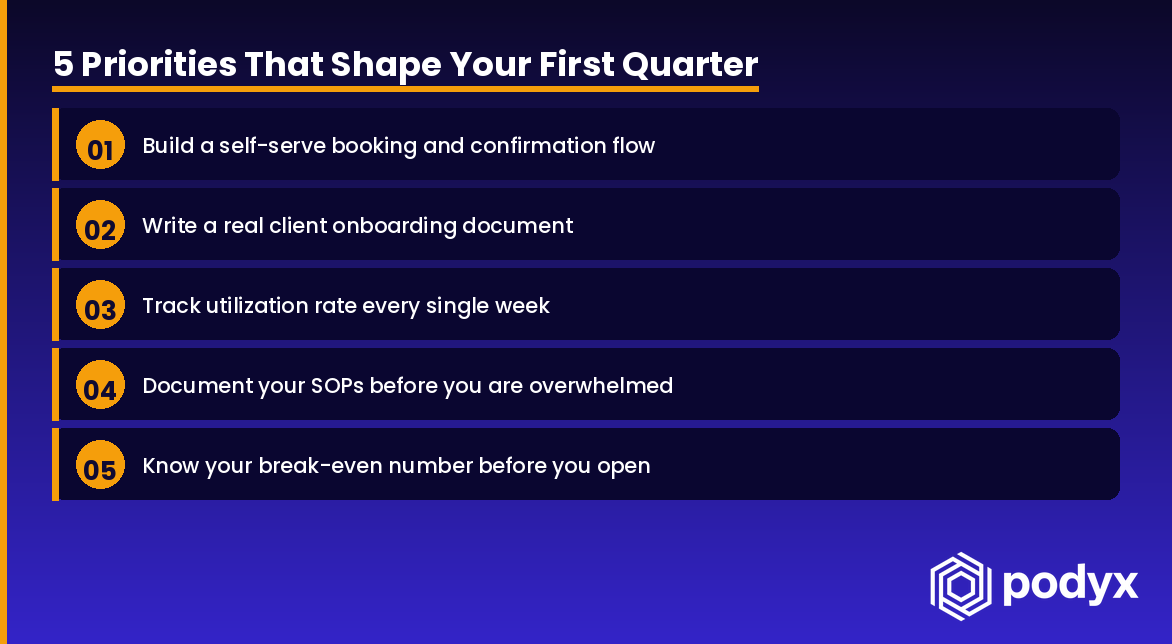
Nail your booking and confirmation flow. If clients have to text you, DM you, or send a PDF form to reserve time, that is already a problem. Your booking flow should be self-serve, clear about what is included, and immediately confirmed. If you are using Podyx for studio management, this is the moment to configure it properly: rooms, packages, time blocks, and automated confirmation emails. Do not leave this to month two.
Write a real client onboarding document. Not a PDF with your studio rules. A short, practical guide that tells clients what to expect when they arrive, how to access the building, where to park, what each button on the console does, and what happens if something goes wrong. Send this with every confirmation. It reduces questions, builds confidence, and makes your studio look more professional than 80 percent of your competitors.
Define your offer clearly. A lot of new studios launch with vague packages. "Full day rate available, DM for pricing." That ambiguity costs you bookings. In your first 30 days, finalize your rate structure, write it down, and publish it. If you need a framework for building your pricing tiers, the Podyx podcast studio pricing guide is a useful place to start.
The goal of month one is operational confidence, not awareness. You want to know that when a client walks in, everything works the way it should.
Days 31 to 60: Get Your First Real Clients (and Learn Fast)
By the time you hit day 31, you should be booking sessions. Not necessarily at full capacity, but consistently. The middle 30 days are when you shift from building to testing.
Every session you run in this phase is a learning opportunity. Pay attention to where clients get confused. Notice which room setup requests come up repeatedly. Track which time slots fill fastest and which stay empty. You are collecting data, and that data will shape your next 60 days of decisions.
A few specific things to focus on in this phase:
Build your referral instinct early. After every strong session, ask. Not a big formal survey, just a quick follow-up message: "Glad it went well. If you know anyone else who could use the space, we would love an introduction." Most new studios underestimate how much early growth comes from word of mouth within a tight creator community. Referrals made in your first two months often anchor your first wave of regulars.
Start tracking utilization. Utilization rate is one of the most important numbers in your business, the percentage of bookable hours that are actually booked. If you are running below 40 percent in month two, you have a demand or awareness problem worth addressing now. If you are at 80 percent or above, you need to think carefully about capacity and pricing before you hit a ceiling. The article on how to increase your studio utilization rate covers the tactics for filling empty slots without discounting your way through them.
Identify your best-fit client. By the end of month two, you should have a working hypothesis about who your best client is: their production style, their session length, their budget, what they value. This is not academic. It informs where you spend the next month of marketing energy.
Days 61 to 90: Systematize and Document Everything
The third month is where studios either start to accelerate or start to plateau. The difference almost always comes down to one thing: whether the owner has started to build systems or is still making every decision manually.
By day 61, you should have enough session history to start building real standard operating procedures. Not theoretical ones based on what you thought would happen, but actual procedures based on what you have learned. What is the check-in process, step by step? What do you do when a client is 20 minutes late? What is your policy on session overruns? What happens when equipment fails mid-session?
Writing these down serves two purposes. First, it forces you to actually decide on these things rather than winging it each time. Second, it prepares you to eventually hand off or delegate parts of the operation. Studios that grow past the one-owner model are always built on documented processes. As covered in the full guide to SOPs for podcast studios, the studios that scale fastest are the ones that codify their operations early, before the chaos of growth makes documentation feel impossible.
This third month is also the right time to look at your business model more critically. Are you only offering hourly bookings? Have you thought about packages or memberships? Are there add-on services your clients keep asking about that you are not yet offering? If you want to think through the structural options, this breakdown of podcast studio business models covers the main revenue approaches and when each one makes sense.
The goal of month three is reduction in cognitive load. You want to be thinking less about how to run each day and more about how to grow the business.
The Money Mindset in Months One Through Three
Studio owners who struggle in their first quarter almost always share one financial pattern: they are too optimistic about revenue and too slow to watch costs.
In a physical studio, costs are real before revenue is. You have rent, insurance, equipment, software, and a dozen smaller line items running from day one. Revenue scales with bookings, and bookings take time to ramp. This gap is normal. It is also where a lot of first-time studio owners panic and make bad decisions: aggressive discounting, taking on clients who are not a good fit, deferring equipment fixes that later become major problems.
A few principles that tend to hold across the first 90 days:
Set a monthly break-even target before you open. Know the exact number of billable hours you need to cover costs. Post it somewhere you see it. This single number makes a lot of decisions easier.
Do not discount in month one. Discounting trains your early clients to expect lower prices. It is very hard to walk back. If you want to build early momentum, offer a free short session for a testimonial, or give something extra with a standard booking. Do not cut the rate.
Track revenue weekly, not monthly. Monthly tracking hides the signal. A week where you book nothing is an early warning that something in your marketing or availability needs to change. Seeing that in week three is far more useful than noticing it on a monthly review in week five.
What to Measure in Your First Quarter
At the end of 90 days, you need to be able to answer a handful of specific questions. If you cannot answer them, you have a data problem that will slow your growth in quarter two.
The numbers that matter: total sessions completed, total revenue, average booking value, utilization rate by week, client acquisition source (how did each client hear about you), and number of repeat bookings. That last one is underrated. A studio where 40 percent of month-two clients come back in month three is in a fundamentally better position than one with all new clients every month.
You also want a qualitative read: what do clients say they love, what have they complained about (even small things), and what have you personally found hardest to manage? These qualitative signals point at the systems and decisions most worth improving in the next quarter.
If you have not yet joined a community of other studio owners, the end of the first quarter is an ideal time to connect with peers who have already navigated this phase. The Podcast Studio Owners community on Skool is where many studio operators share what is and is not working, ask questions, and get feedback from others who have been in exactly this spot.
The Mindset That Separates Early Survivors From Early Scalers
There is a version of the first 90 days that feels like constant firefighting: one technical problem, one difficult client, one slow week after another. That version is real, and most new studio owners experience at least some of it.
But there is another version where each problem is a data point, each slow week is a signal to investigate, and each good session builds a reference point for what great looks like. The difference between these two experiences is mostly attentional. Are you reacting or are you observing and improving?
The studios that grow past their first year are almost never the ones with the best gear or the most beautiful rooms. They are the ones where the owner treated the first 90 days as a learning sprint, not just a launch phase. They built their systems early, talked to their clients honestly, tracked the numbers that mattered, and made adjustments before problems became patterns.
Your first 90 days will not be perfect. They should not be. But they should be deliberate.
The One-Line Summary
The first 90 days of running a podcast studio are not about growth: they are about building a business solid enough to grow.
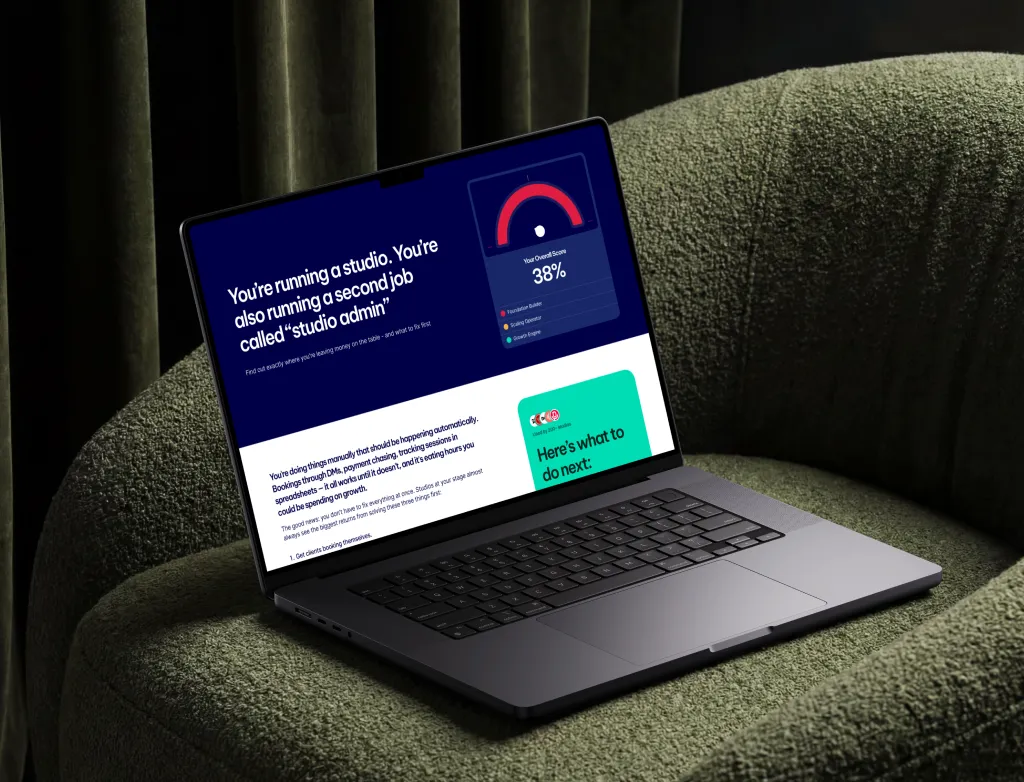
Not sure where your studio actually stands right now? The Podyx Studio Maturity Assessment takes 2 minutes and tells you exactly where your operations are solid and where they are quietly costing you bookings.
Or if you are ready to put the right system in place from day one, Podyx handles bookings, client management, and utilization tracking built specifically for podcast studios.
.jpeg)
.jpeg)