Opening a podcast studio is an exciting milestone. You've secured the space, invested in cameras, lighting, and audio equipment, and carefully designed the environment to feel both professional and comfortable. Your website is polished, optimized for search, and ready to attract clients. Everything looks set for recordings to start rolling.
Then reality kicks in.
Once clients begin reaching out, studios quickly discover that managing bookings and payments is often more complex than building the studio itself. Scheduling conflicts, payment delays, rescheduling requests, and client communication can quietly become some of the biggest operational challenges a studio faces.
The Early-Stage Reality: Manual Booking Chaos
Many studios begin with manual systems. Bookings might come through email, phone calls, social media messages, or even direct walk-ins. Availability is tracked in spreadsheets, calendars, or notebooks. Payments are sometimes handled after recording through cash, card terminals, or bank transfers.
While this approach can work at the very beginning, it tends to create friction as demand grows. And, while it is manageable with a small number of clients, if you ever think of scaling, you will need to operate like a professional from the beginning. That is how you create a perception in your clients' minds that you are a high-end service provider, even if you are not there yet.
Manual booking workflows often lead to:
- Double bookings or scheduling overlaps
- Time spent coordinating availability through back-and-forth messages
- Unclear service offerings or pricing confusion
- Increased risk of no-shows or last-minute cancellations
- Difficulty tracking client history or repeat bookings
Over time, these small inefficiencies compound and begin to limit studio growth. If any of these sound familiar, it may be time to evaluate whether your current booking tool is holding you back.
Structuring Offers So Clients Can Book With Confidence
Studios rarely offer just one type of recording session. Most operate with multiple setups, room configurations, equipment tiers, or bundled services such as video editing, engineering support, multiple recording sessions, or post-production.
Without a structured booking system, communicating these options can be difficult. Clients may not fully understand what they are purchasing, which can lead to longer sales conversations and missed opportunities to upsell valuable services.
Studios that streamline their booking experience typically present their services in a way that allows clients to:
- Compare studio setups and recording packages
- Discover bundled offers or seasonal promotions
- Add optional services during the booking process
- Clearly understand pricing before confirming a session
When clients can easily navigate available options, booking becomes faster, and conversion rates often improve naturally.
Managing Payments and Reducing Financial Risk
Payment handling is another area where studios evolve over time. Collecting payment after recording can create uncertainty, especially when dealing with new clients. No-shows or late cancellations can result in lost revenue and wasted studio preparation time.
Many studios now require partial or full prepayments to confirm bookings. This approach helps:
- Reduce cancellation risk
- Secure revenue in advance
- Improve overall cash flow predictability
- Encourage clients to commit more seriously to their scheduled session
Flexible payment structures also allow studios to balance accessibility with protection, offering deposits, staged payments, or full upfront pricing depending on their business model.
Self-Service Booking and Rescheduling
One of the biggest operational time drains for studio owners is managing scheduling changes. Clients frequently need to reschedule recordings, and handling these requests manually can quickly become overwhelming.
Studios that implement self-service booking tools allow clients to:
- View real-time availability
- Reschedule sessions within defined rules
- Receive automated confirmations and reminders
- Select available time slots that already account for buffer time between recordings
This not only reduces administrative workload but also improves the client experience by giving them flexibility without requiring direct communication for every adjustment.
Turning Bookings Into Long-Term Client Relationships
Every booking contains valuable client data, preferences, and service history. Studios that track this information effectively can create stronger relationships and generate repeat business more easily.
With organized booking data, studios can:
- Identify returning clients and personalize their experience
- Send targeted offers or loyalty incentives
- Re-engage inactive clients
- Understand which services or packages perform best
Retention often becomes more cost-effective than constantly acquiring new clients, making client relationship management an important part of studio sustainability.
Using Booking Data to Improve Studio Operations
Beyond scheduling, booking data can provide insights into overall studio performance. Understanding demand patterns helps studio owners make informed decisions about staffing, pricing, marketing, and even working hours.
For example, visual scheduling analytics(like an in-app calendar) can help studios identify:
- Peak booking days and seasons
- Underutilized time slots
- Trends in service demand
- Opportunities to introduce promotions or adjust pricing
Over time, these insights help studios operate more strategically rather than relying on intuition alone.
The Shift Toward Automated Studio Management
As podcasting continues to grow as an industry, studio operations are becoming more sophisticated. Many studios are moving away from manual coordination toward integrated booking and payment systems designed specifically for creative production environments.
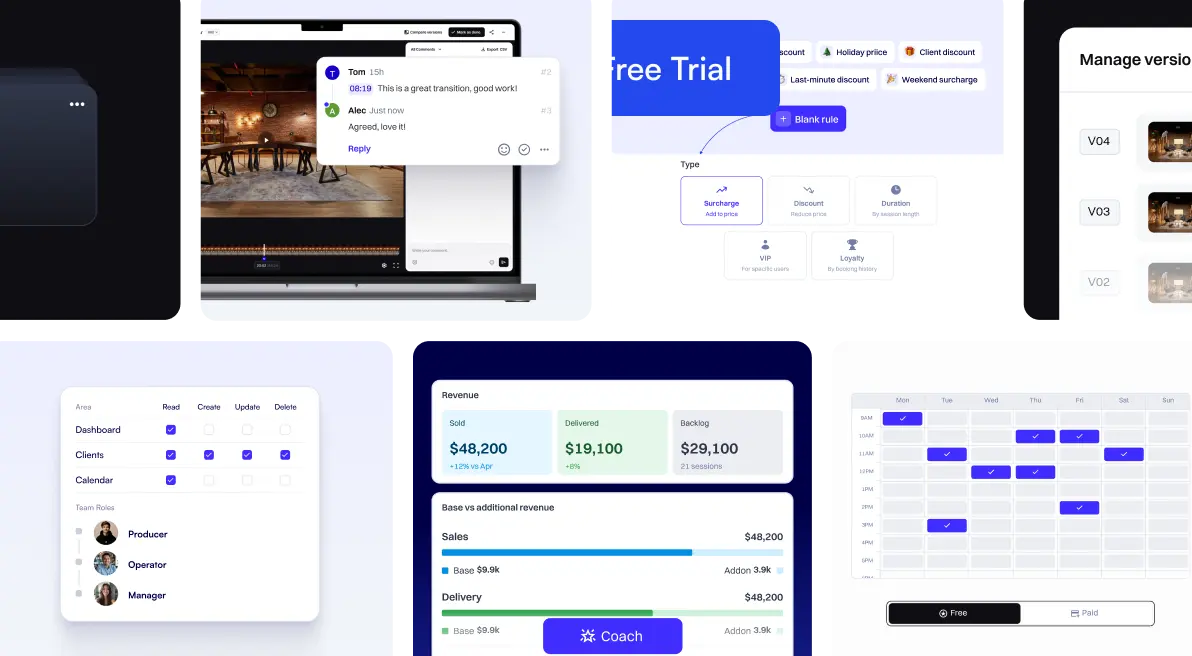
Platforms like Podyx are built to centralize these operational workflows by helping studios organize services, automate scheduling, manage payments, and track client relationships in one place. While each studio's operational setup may differ, the broader trend toward automation reflects a growing need for efficiency and scalability within the industry.
Building Systems That Support Studio Growth
A well-designed studio attracts clients, but strong operational systems keep them coming back. Booking and payment management may not be the most visible part of running a studio, yet they often determine how smoothly the business operates behind the scenes.
Studios that invest early in structured workflows tend to spend less time managing logistics and more time focusing on production quality, client relationships, and long-term growth.
The hard part is rarely the booking. It is making sure the payment lands before the session does. Here is what happened when our own studio got that order wrong, and how we sequence it now.
Want to see how Podyx handles bundles, add-ons, and corporate client management in one platform? Book a free 30-minute walkthrough.
Podyx gives you the tools to structure your pricing, sell bundles, manage add-ons, and track average revenue per session — all in one place. Try it free for 30 days, no credit card required.
.jpg)
.jpg)
.jpeg)