Every studio owner has a version of this story. A client walks out after a great session, tells you it was the smoothest recording experience they've had, and says something like "I'm going to send my friend your way." Sometimes the friend shows up. Most of the time, nothing happens. Not because the client didn't mean it, but because nothing in your business actually turned that moment into a booking.
That gap between goodwill and pipeline is where most studios leave money on the table. You already have the hardest part of growth solved: satisfied clients who would happily vouch for you. What's usually missing is the structure around that goodwill: a clear ask, a reason to act now instead of "eventually," and a way to track what happened after the referral left someone's mouth and entered your calendar.
This matters more the further along you are. In the early months, most bookings come from cold outreach, local SEO, and whatever marketing you can manage on top of running sessions. But once you have a base of studio clients who trust you, referrals become one of the cheapest, highest-intent lead sources available. A referred client already believes the studio works because someone they trust said so. They convert faster and churn less. The studios that grow past the plateau of "we're busy but not scaling" are almost always the ones that stopped hoping for referrals and started engineering them.
This piece walks through what a referral program actually needs to work: the mechanics, the incentives, the timing, and the tracking that turns a nice compliment into a repeatable acquisition channel.
Why Most Studios Leave Referrals to Chance
Ask ten studio owners if they have a referral program and most will say some version of "yes, kind of." What they usually mean is that they'll give a discount if someone happens to mention a friend referred them. That's not a program. That's a policy nobody knows about until it's needed.
The problem with informal referrals is that they depend entirely on the client remembering to mention your studio, at the right moment, to the right person, and then following up. That's three points of failure, none of which you control. A real program removes the guesswork: it tells the client exactly when to refer, exactly what they get for doing it, and exactly how to do it in under thirty seconds.
This is also where effective client acquisition tends to get miscategorized. Referrals often get filed under "nice to have" while paid ads and SEO get the budget and attention, even though referred clients typically cost far less to acquire and close faster. If your studio is spending real money on top-of-funnel marketing but has no structured way to convert existing happy clients into new bookings, you're solving the expensive half of the problem while ignoring the cheap half.
What a Real Referral Program Actually Requires
A referral program that generates pipeline has four parts, and skipping any one of them is usually why past attempts fizzled out.
First, a trigger moment: the specific point in the client relationship where you make the ask, rather than leaving it to chance. Second, an incentive that's worth acting on for both the referrer and the person they refer. Third, a frictionless mechanism, meaning a link, code, or form that takes seconds to use. Fourth, tracking that tells you which referral actually converted into a paying booking, not just which client said nice things.
Most studios that have "tried referrals before" actually only had the first part: a verbal ask with no incentive, no easy mechanism, and no way to trace whether it worked. That's why it felt like it didn't move the needle. The program wasn't weak, it was incomplete.

Picking the Right Incentive Without Cheapening the Brand
The incentive is where most studio owners hesitate, and understandably so. Discount too aggressively and you train your best clients to expect price cuts. Offer too little and nobody bothers. The goal is an incentive that feels generous relative to the ask (which is genuinely small, just a name and a nudge) without training people to wait for a deal before booking again.
A few structures tend to work well for studios specifically:
Studio credit toward a future session, rather than a cash discount, keeps the value inside your business instead of leaving as a straight cost. A double-sided reward, where both the referrer and the new client get something (a free add-on, a discounted first session, priority booking), gives both parties a reason to act. Tiered rewards, where a client's third or fourth successful referral unlocks something bigger like a free half-day block, reward your actual advocates instead of treating every referral as identical.
Avoid pure cash payouts unless you're specifically courting agencies or talent managers as referral partners rather than past clients. Cash tends to attract people optimizing for the payout rather than people who genuinely believe in the studio, and that shows up later as lower-quality referred leads.
Who to Ask, and When
Timing changes everything about referral conversion. Ask too early and the client hasn't had the full experience yet. Ask too late and the emotional high of a great session has faded into the background of their week.
The strongest moment is right after a session that clearly went well: the client is walking out energized, the production went smoothly, and they've just said something positive to your producer or front desk. That's the window. A follow-up email sent within a day or two, while the experience is still fresh, converts far better than a generic quarterly newsletter blast asking for referrals from your entire client list at once.
Renewal and milestone moments work almost as well. A client hitting their tenth session, renewing a membership, or wrapping up a long project is primed to reflect on the value they've gotten, which makes it a natural moment to ask them to share that value with someone else. This ties closely into how studios build the kind of loyalty that makes referrals feel authentic instead of transactional. Clients who already trust you and feel genuinely taken care of don't need much convincing to bring someone else through the door. Clients who are lukewarm will not refer no matter how good the incentive is, so the referral program is really downstream of the overall client experience, not a replacement for it.
Building the Referral Ask Into Your Systems
The mechanism matters as much as the timing. If referring requires the client to remember your email, dig up a code, and explain the details to their friend, most people simply won't bother, even if they meant to.
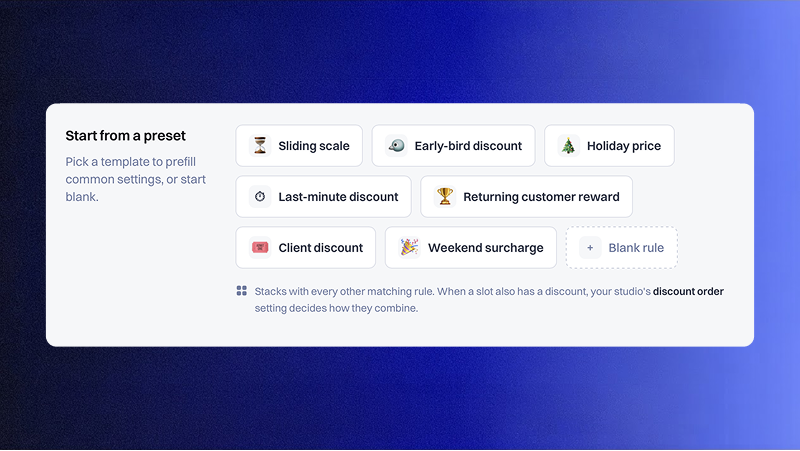
This is where having the right operational tooling changes outcomes. Studios using booking and promo code systems can generate a unique referral link or code per client, automatically apply the incentive when a new client books through it, and see exactly which referrals converted without any manual tracking in a spreadsheet. That single change, moving from "tell your friend to mention your name" to a trackable link sent automatically after a great session, is often the difference between a referral program that generates a trickle of bookings and one that becomes a real, forecastable pipeline source.

Referral Partners Beyond Your Client List
Client referrals are the foundation, but they're not the only source worth building. Other studio owners, especially in nearby but non-competing markets, are a strong referral channel that most studios never formalize. When you're fully booked and a prospective client isn't a fit for your space or schedule, referring them to a trusted studio in another city (and having that relationship work both ways) turns a lost lead into goodwill and, eventually, reciprocal referrals.
This kind of studio-to-studio network tends to form naturally through industry events and communities rather than cold outreach. The first global studio owners meetup in New York is a good example of how these relationships start: owners meeting face to face, comparing notes, and realizing they're not actually competing for the same client pool. The PSO community is where a lot of that ongoing exchange happens between events, with studio owners trading referral tactics, flagging overflow clients to each other, and building the kind of trust that makes cross-studio referrals work.
Local production agencies, event planners, and corporate marketing teams are another underused referral source. They regularly need studio space for clients and rarely have a go-to recommendation, which means the first studio that makes it easy for them to refer consistently earns repeat business from that same source.
Measuring What's Actually Working
A referral program without measurement is just a hope with extra steps. At minimum, track how many referral links or codes were sent out, how many converted into a booked session, and what the resulting revenue was compared to what the incentive cost. Over time, this tells you which client segment refers most (often it's not who you'd expect), which incentive structure converts best, and whether the program is actually cheaper per acquired client than your paid channels.

It's worth reviewing this quarterly rather than setting it up once and forgetting it. Incentives that worked well when you had 20 monthly clients might feel stale at 100, and the trigger moments that felt novel at launch need refreshing so the ask doesn't become background noise your clients tune out.
The One-Line Summary
A referral program only generates real pipeline when it replaces a vague hope with a specific trigger, a fair incentive, a one-click mechanism, and a way to measure what actually converted.
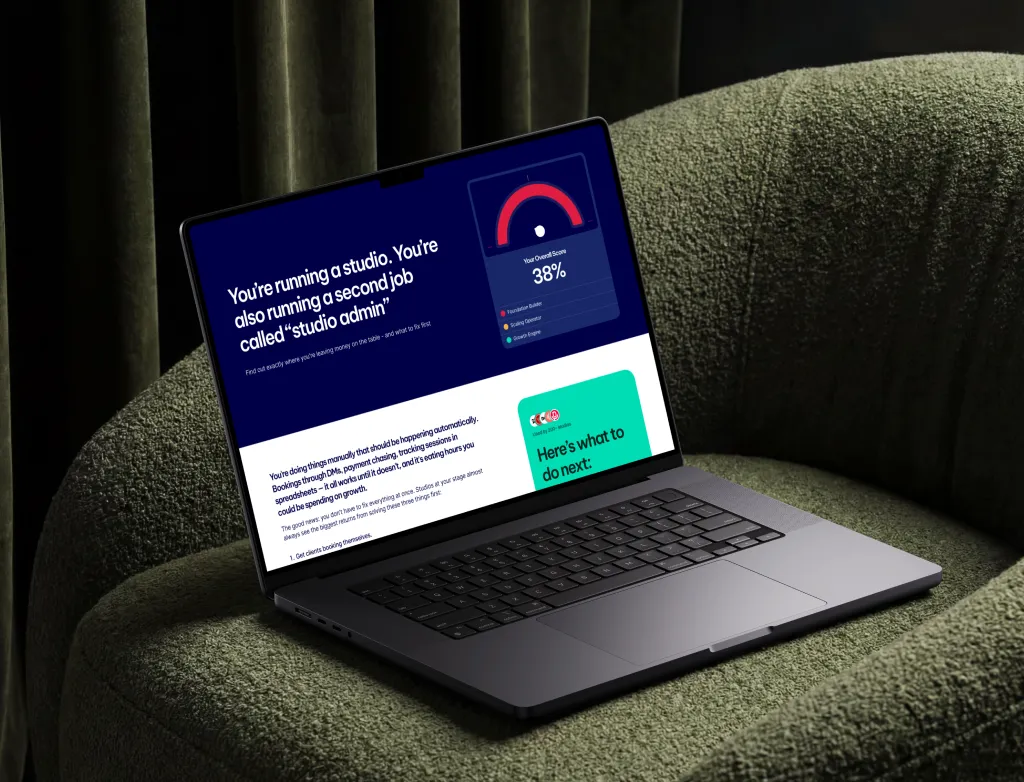
If your studio has hit a point where paid channels are getting expensive and your calendar has room to grow, the fastest next step is usually seeing how a system built for studios handles referral tracking, promo codes, and repeat client management in one place rather than across three disconnected tools. Book a free walkthrough and we'll show you exactly how that works for a studio your size. If you'd rather explore it yourself first, you can start a free trial and set up your first referral link before your next session wraps. And if you're still mapping out where your studio's biggest growth bottleneck actually is, referrals or something else entirely, the studio scorecard quiz takes about two minutes and points you to what to fix first.
.jpg)
.jpeg)