Most podcast studio owners hit the same wall around the 12-month mark. Bookings are filling up, repeat clients are coming back, and the model is proven. But you're still running every session yourself, which means your capacity has a hard ceiling: your own schedule.
Hiring your first producer is the move that breaks through that ceiling. It's also one of the most stressful decisions a studio owner makes, because you're not just bringing in extra hands. You're handing over the client experience you've spent months building. If the hire goes wrong, a client has a bad session. If it goes very wrong, they don't come back.
This guide covers what actually matters when you make that hire: what to look for, where to find the right person, how to structure pay, and how to set your new producer up to run sessions the way you would.
The Real Job Description (It's Not Just Audio Skills)
Most job listings for podcast producers focus almost entirely on technical skills: DAW proficiency, mic placement, gain structure, basic audio engineering. These things matter. But they're also the easiest part to teach. The harder skills are the ones that never appear on a CV.
Your first producer needs to be a host wrangler. Guests walk into recording sessions nervous, unsure of themselves, and sometimes difficult. A good producer reads the room, settles people down before the red light comes on, and keeps the session moving without making the host feel rushed. That requires emotional intelligence and genuine warmth, not just knowing how to set a noise gate.
They also need to be a problem-solver under pressure. Equipment fails. A guest's laptop introduces feedback. The AC kicks in and there's now a low hum on the recording. Your producer needs to troubleshoot quickly and calmly while the client is sitting right there watching. Technical competence helps, but composure under pressure matters more.
Reliability might sound obvious, but it deserves its own mention. A late producer doesn't just inconvenience a client: it reflects directly on the studio's brand. When you're evaluating candidates, pay attention to how they communicate throughout the hiring process itself. Do they respond on time? Are they clear and specific? Do they follow through on small commitments? That's all useful data before they ever set foot in the booth.

Where to Find Your First Producer
The best producers for a podcast studio don't always come from traditional job boards. Here are the sourcing channels that tend to produce the strongest results.
Your own network is the first place to look. If you've been operating for a year or more, you already know people in adjacent spaces: video editors, sound designers, music producers, radio professionals. Any of them could make the transition into podcast production with the right orientation. Post on LinkedIn with a clear description of what the role actually looks like day to day, not just the technical requirements.
Podcast production communities are another strong source. There are active groups of freelance podcast producers on Facebook, Reddit, and Skool. Many are already comfortable with the client-facing side of the work and just need to learn your specific studio setup.
Local audio engineering graduates are worth considering too. Music colleges and audio programs turn out technically solid graduates who haven't found their niche yet. Podcast production is stable, client-facing work, and the right graduate can be an excellent hire if you're prepared to invest time in their onboarding.
The Podcast Studio Owners community is also worth posting in. Other studio owners in the PSO group have navigated the same hiring process and can recommend candidates or share what's worked for them specifically. It's a faster path to a warm lead than a cold job listing.
Whatever your sourcing channel, build a paid trial session into the process. Have candidates run a mock recording with you playing the client. You'll learn more in 60 minutes than you will from three interviews.

What to Pay (and How to Structure It)
Pay is one of the most common sticking points for studio owners making their first hire. Here's a practical framework.
Per-session rates work well for early hires, especially if your booking volume is still variable week to week. A typical range in most English-speaking markets is $25 to $75 per session, depending on local cost of living and how complex your sessions run. Multi-guest, multi-cam setups with live editing warrant the higher end of that range.
Part-time salary makes more sense once you're booking 15 or more sessions per week. At that volume, you need someone reliable and calendar-committed, not someone managing their own freelance workload alongside your bookings.
Bonuses tied to client retention or rebooking rates can be a strong motivator once a producer is established in the role. It aligns their incentives directly with the studio's growth and gives them a reason to care about the client relationship beyond just the session itself.
Whatever structure you choose, be transparent about it upfront. Put the rate in the job posting. Producers who negotiate hard before they've produced any results are rarely the ones who work out long-term.
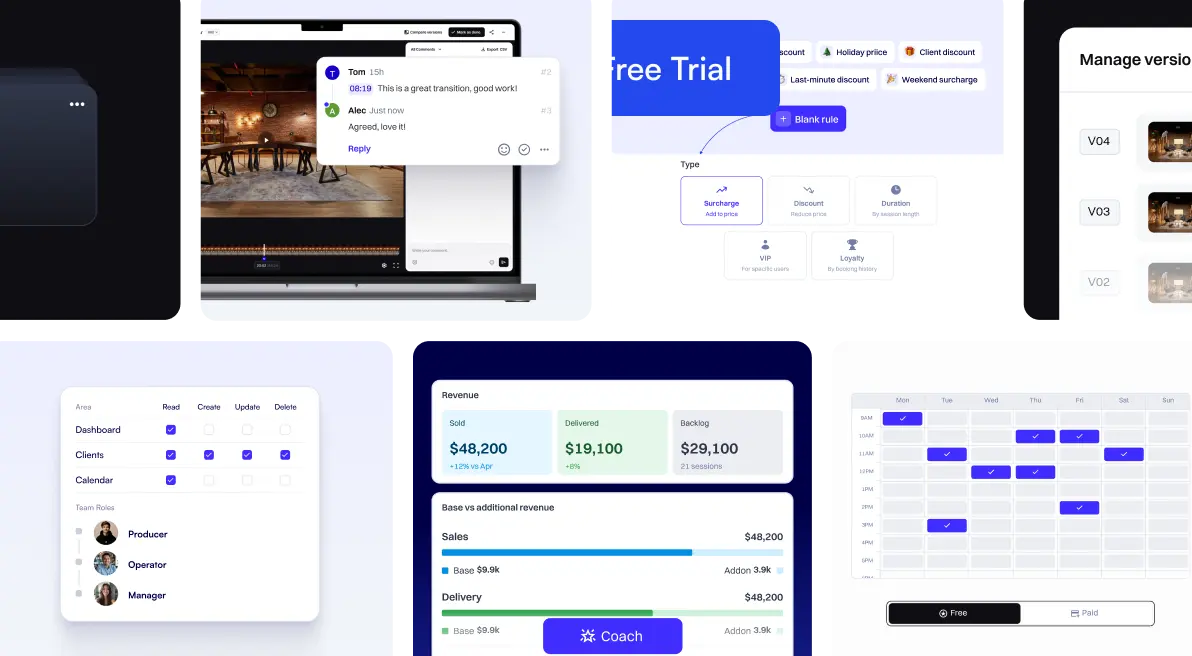
As your studio grows and this hire becomes a core part of your operations, the Podyx platform helps you manage session scheduling, client communications, and operational data in one place, so your producer can stay focused on the session rather than chasing information.
The Interview That Actually Filters Well
Standard interview questions don't tell you much. "What's your greatest weakness?" doesn't reveal whether someone can handle an awkward 30-minute gap between back-to-back guests while keeping the host calm.
Better questions give you real signal.
Ask them to describe a session that went wrong and how they handled it. If they haven't had a session go wrong yet, ask them to walk through exactly what they'd do if the guest audio fails two minutes into the recording.
Ask how they'd handle a client who wants to go over time when you have another booking in 15 minutes. This scenario comes up constantly and requires both tact and firm assertiveness. The way they answer tells you a lot.
Ask what questions they'd have about the studio before their first solo session. A thoughtful answer covers the gear setup, the client check-in process, emergency contacts, and how to log any issues. A vague or minimal answer tells you they haven't thought carefully about what the job actually requires.
The paid trial session is still the most important filter of all. Use it to evaluate technical execution, yes, but watch more closely for how they communicate with the "client," how they set up without being walked through everything twice, and whether they're comfortable asking questions when something is unclear.
Onboarding That Sets Them Up to Win
The most common reason first hires fail is inadequate onboarding. You know your setup intuitively after months of running it. They don't. What feels obvious to you is completely invisible to them.
Build a proper onboarding checklist before the hire starts. Cover the full session flow from client arrival to session close, your gear setup and how to troubleshoot the most common issues, how to handle typical client requests or complaints, how to log sessions and flag anything unusual, and who to contact if something is outside their scope.
If you've already built your SOPs (and if you haven't, this guide on SOPs for podcast studios covers how to do it from scratch), your onboarding is essentially a walkthrough of those documents combined with hands-on time in the booth.
Plan for at least three shadowed sessions where your new producer watches you run a booking, followed by three sessions where they run it while you observe quietly from the back. Only after those six sessions should they be going solo. The ramp-up feels slow when you're eager to free up your schedule, but it protects your client relationships while they find their footing.

The Hardest Part: Letting Go of the Session
Even when you've done everything right, handing your first session to someone else feels uncomfortable. You built the studio, you know every client, and you care more about the outcome than anyone you could possibly hire.
That feeling doesn't go away quickly. But staying involved in every session defeats the purpose of the hire and signals to your producer that you don't trust them, which eventually causes them to leave.
The practical solution is a tight feedback loop. After each solo session in the first month, do a 10-minute debrief. What went well? What was unclear? What would they handle differently next time? Keep it conversational, not evaluative. The goal is to accelerate their learning curve, not to audit their performance from a distance.
As covered in how podcast studio owners can become profitable faster, scaling a studio requires trusting the people you've brought in. That trust isn't built by hoping for the best. It's built through clear systems, direct communication, and giving people the room to improve.
Your studio's long-term capacity depends on having someone who can run sessions without you in the room. Increasing your studio's utilization rate is ultimately a people problem as much as a scheduling one. A producer who can handle sessions independently doubles your effective capacity overnight.
Once that foundation is in place, you stop being the ceiling. You become the person focused on growth.
The One-Line Summary
Your first producer hire is the most leveraged decision you'll make in year two, and it pays off in proportion to how clearly you've defined what you actually need before the process starts.
Podyx gives your new producer a clean, organized platform to manage bookings, client records, and session notes from their very first day.
Prefer to explore on your own first?
%2520(1).jpeg)
.jpg)
.jpeg)