We've seen studios run campaigns we were convinced would work.
The visuals were strong. The copy was sharp. The offer felt irresistible. They boosted posts, ran Meta ads, pushed Google traffic — and then watched the clicks arrive and vanish without a booking. No leads. No inquiries. Just people clicking around and disappearing.
It wasn't until they fundamentally changed how they structure campaigns — specifically, what they asked people to do — that conversions started to happen consistently. The problem wasn't the ads. The problem was the CTA.
If your studio's marketing isn't converting, this is almost certainly where the breakdown is.
The Core Problem: Asking for Too Much, Too Soon
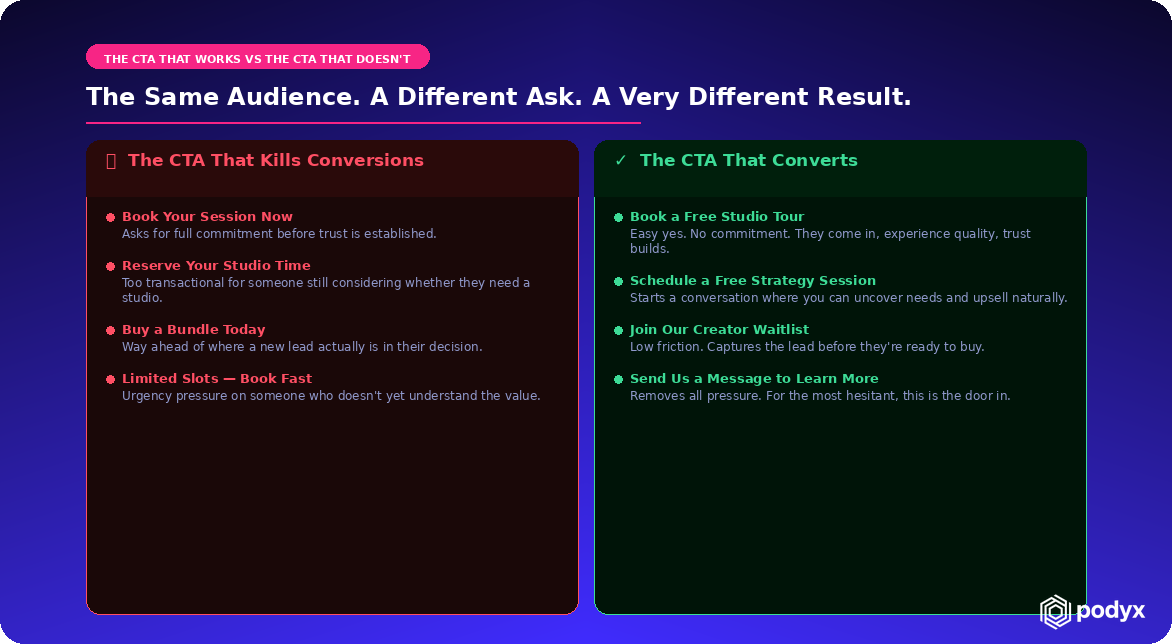
Most podcast studios run the same kind of direct-response ad: great visual, short copy, "Book Your Session" button.
For a certain type of client — someone who already knows what a podcast studio is, has already decided they want to record, and is actively comparing options — that ad can work. But that person represents a small fraction of the market.
The majority of the people your marketing reaches are somewhere earlier in the journey. They're aware they want to build a personal brand, or launch a show, or produce content for their business — but they haven't decided on studio recording yet. They don't fully understand what your studio offers. They're not ready to spend before they understand what they're buying.
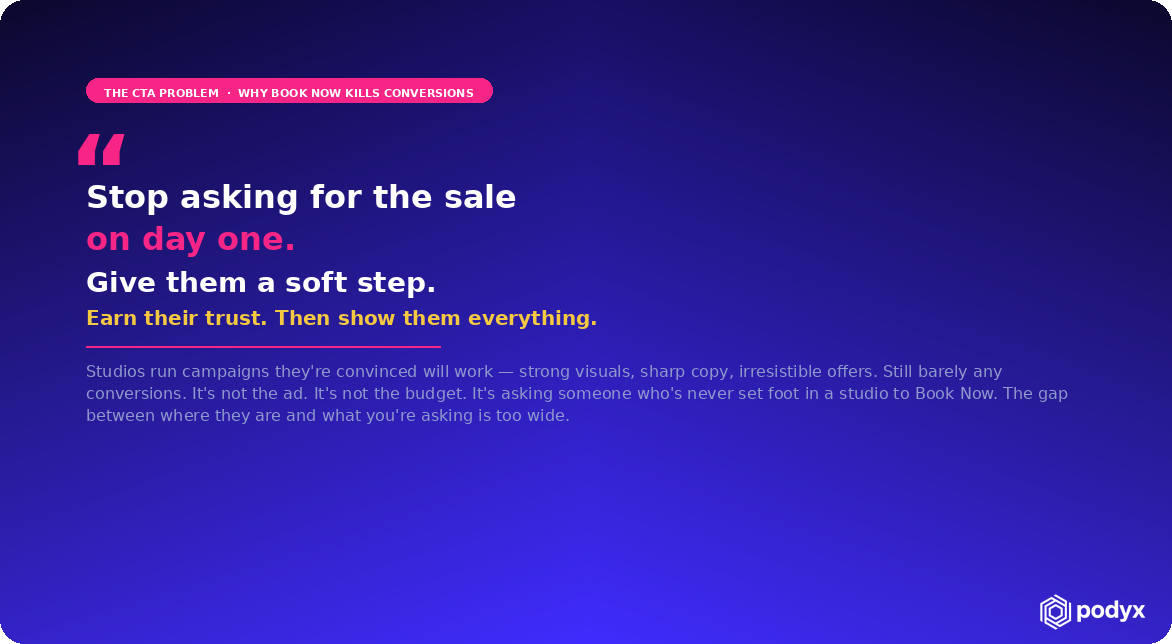
Asking someone who's never set foot in a studio to "Book Now" is like asking someone on a first date to sign a lease together. Even if they're interested, the gap between where they are and what you're asking is too wide. They click away.
The Fix: Give Them a Soft Next Step
The shift that changed our conversion rate wasn't a better offer or a lower price. It was a softer call to action.
Instead of "Book Your Session," we started using:
- Schedule a free strategy session
- Book a studio tour
- Join our waitlist for upcoming offers
- Send us a message to learn more
These asks require almost no commitment. They're easy to say yes to. And they do something that a direct booking request never can: they start a conversation.
Once someone takes that small step — they book a tour, they schedule a call, they send a message — everything changes. Now you have their attention and their trust. You're in the conversation. You've shifted from being an ad they scrolled past to a person who's genuinely trying to help them figure something out.
And that's when the real selling begins. Not selling in the pushy sense — but showing them what's possible. The tour reveals the production quality. The strategy call surfaces their actual goals. The follow-up message is a natural place to offer a package that maps precisely to what they told you they need.
The difference between studios that convert well and studios that don't often comes down to this single structural choice: make the first yes easy.
Understanding the Funnel
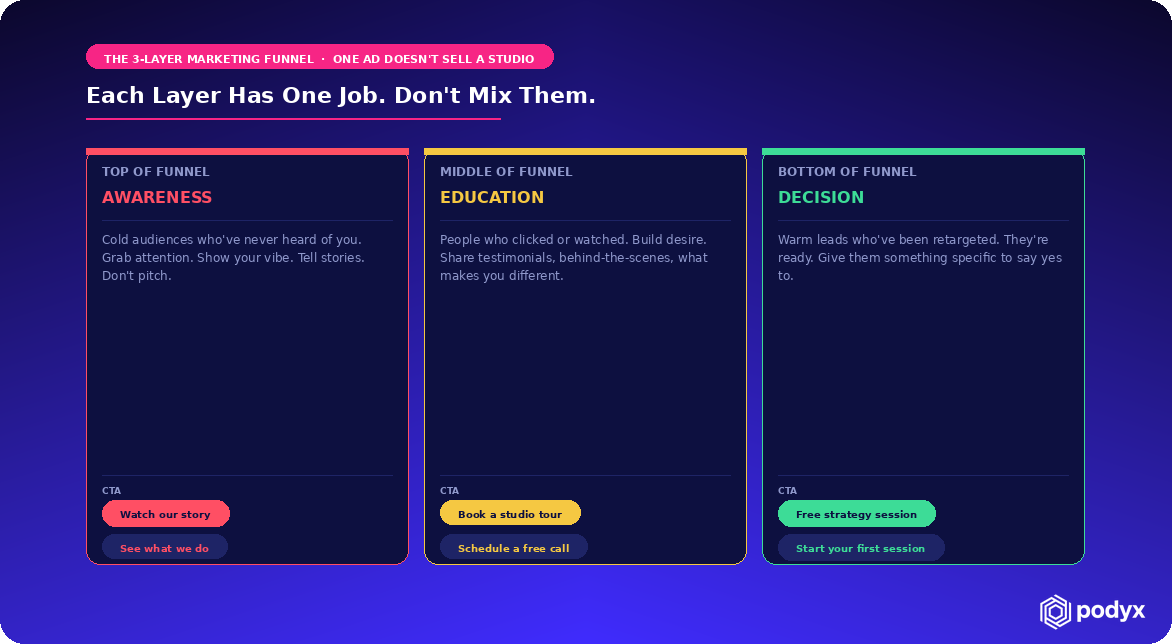
One ad doesn't sell a podcast studio. A funnel does.
A funnel isn't a buzzword. It's the path a potential client travels from not knowing you exist to choosing you as their production partner. Every step of that path has a job — and trying to do all three jobs in a single ad is why most campaigns fail.
The top of the funnel is about attention. These people don't know you. They've never thought about professional studio recording. Your job at this stage isn't to sell — it's to create curiosity. Show your vibe. Tell a story. Share a transformation. The question this content should answer for someone who's never heard of you: "Wait, what's this? That's interesting."
The middle of the funnel is about trust. These people have engaged — they clicked, watched your video, and visited your website. Now they're thinking about you. Your job here is to educate: who you are, what you do, why you're different. Testimonials, behind-the-scenes content, explainer videos, creator stories. Start building desire.
The bottom of the funnel is about decision. These people are ready to act. They've been to your website multiple times. They've watched your content. They've been retargeted. Now you can ask them to do something specific — a studio tour, a strategy call, a limited-time bundle. But this is still not "Book Now." It's still a specific, low-friction next step. The message should feel like it's speaking directly to someone who's been thinking about this — because it is.
Most studios get stuck because they try to do all three of these in a single boosted post. That never works. Awareness content to cold audiences should not look like a closing ad. Retargeting ads to warm audiences should not look like introduction content. Each layer has its own role.
The Beginner Segment: Your Biggest Opportunity
There's one specific client segment where this approach matters most, and where most studios leave the most money on the table: beginners.
First-time podcasters. Founders who want to build their brand. Marketers who've been told they should start a show for their company. People who've thought about recording for months but haven't done anything yet.
These clients are not going to convert through a "Book Now" ad. But they represent a substantial portion of the market, and they have a quality that more experienced creators often don't: they're looking for guidance, not just a room. If your studio becomes the one that helped them figure it out — that gave them the roadmap, the strategy session, the clear sense of what they were getting — they'll trust you with everything. Editing. Clips. Strategy. Show planning. The whole package.
The path to those upsells starts with a soft entry point. A free consultation. A studio tour. A message from your team that says "we've got you covered" rather than a checkout link.
Beginners are grateful for that guidance. They're not price-resistant when they feel supported — they're actually more open to premium packages because they don't want to figure it out alone. The bundle that includes editing, clips, and strategy becomes attractive precisely because someone walked them through why they need it.
Why Landing Pages Matter More Than You Think
One structural fix that consistently improves conversion rates but most studios skip: dedicated landing pages for each campaign.
Sending ad traffic to your homepage is like sending someone to a restaurant menu that has 200 items and no recommendations. They're overwhelmed and they leave.
A campaign-specific landing page does one thing: it continues the exact conversation your ad started. If your ad is about a free studio tour for new podcasters, the landing page talks about exactly that — why a studio tour is valuable, what they'll see, what to expect, and one clear button to book it. Nothing else. No navigation. No other offers. Just the path forward.
Campaign-specific landing pages consistently produce significantly better conversion rates than generic website traffic because the message matches the moment. The person who clicked on your ad about starting a podcast sees a page that continues talking about starting a podcast — not your full services menu or your pricing for corporate clients.
Build one landing page per campaign. Keep it focused. Match the message. Track conversions separately so you know what's actually working.
Measuring What's Actually Converting
Here's the test: look at your current primary call to action across your marketing. Is it "Book Now" or some version of it?
If yes — and you're not seeing the conversion rate you want — replace it with a softer next step for your awareness and mid-funnel content. Keep the direct booking option available (it works for warm, ready-to-act leads), but layer in the easier on-ramps.
Then track it. What's your click-through rate on the new CTA? What percentage of people who book a tour actually convert to a session booking? What does the average revenue per client look like for clients who came through a strategy call versus a direct booking ad?
The numbers will tell you where the friction is. And once you know where it is, fixing it is usually simple.
The One-Line Summary
If you want your studio's marketing to work — especially for the clients who represent your biggest growth opportunity — stop asking for the sale on day one.
Give them a soft step. Invite them in. Earn their trust. Then show them everything your studio can do, and let the upsell happen naturally.
That's how you build a marketing machine that converts, scales, and makes your studio the obvious choice in your market — not because you spent more on ads, but because you structured the conversation better than everyone else.
Want to see how Podyx helps you manage your studio's client pipeline, track booking conversions, and build predictable revenue through bundles and retainers? Book a free 30-minute walkthrough.
Podyx gives you the tools to run a studio that goes beyond hourly bookings — manage events, corporate projects, and client relationships in one place. Try it free for 30 days, no credit card required.
.jpeg)
.jpg)